
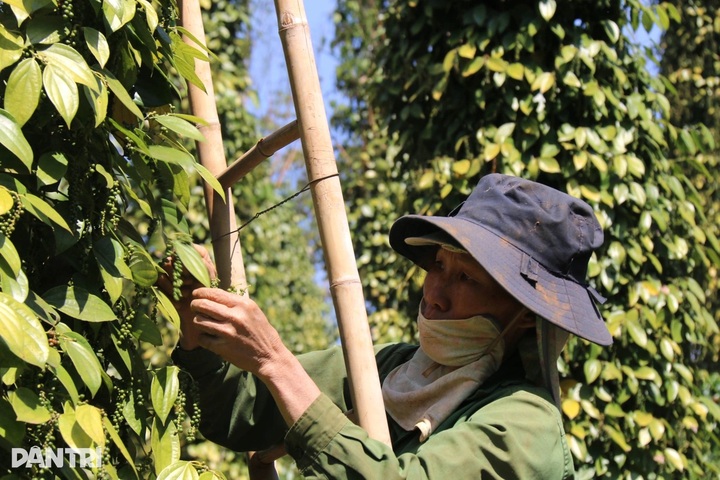
Farmers across major pepper-growing regions have entered the 2026 harvest season with optimism as farm-gate prices remain elevated.
In the Central Highlands, the recent Lunar New Year brought strong prices for several key crops including coffee, durian and pepper.
Le Thi Thom, a farmer in Quang Phu commune in Dak Lak Province, said her family grows nearly one hectare of coffee intercropped with pepper, along with about 0.5 hectares of durian.
Before the Lunar New Year holiday, coffee prices were around VND 102,000 (about USD 3.88) per kilogramme, while durian remained above VND 70,000 per kilogramme.
After the holiday, the family began harvesting pepper, with early-season prices exceeding VND 150,000 per kilogramme.
In Tan Hoi hamlet of Tan Tien commune in Dong Nai Province, farmer Le Van Den said his family maintains more than 3,000 mature pepper vines and planted another 600 during the 2025 rainy season.
Den said the farm previously had more than 4,000 vines when pepper prices were high, but many were removed during years of price declines.
The situation improved in 2024 when the farm harvested four tonnes of pepper and sold it for about VND 160,000 per kilogramme, earning roughly VND 500 million after costs.
According to Vietnam Pepper and Spice Association secretary general Le Viet Anh, tightening domestic supply has forced exporters to increase pepper imports from other countries.
Vietnam imported 42,688 tonnes of pepper in 2025, up more than 16 per cent in volume and about 51 per cent in value compared with 2024.
Domestic output in 2026 is forecast to fall by 15-20 per cent, while global pepper supply may also decline by a similar margin as inventories in major producing countries shrink.
Although Vietnam accounts for about half of global pepper exports, it still imports significant quantities for processing and re-export.
The 2026 harvest began in late February and is expected to last until the end of April.
Farmers are unlikely to sell their entire harvest at once, instead releasing part of their output to cover production costs while storing the rest in anticipation of further price increases.
Experts say global demand could rebound, particularly in the US market after tariffs on pepper were reduced to zero, while purchases from China are also expected to rise as inventories decline.
Huynh Tan Dat, director of the Department of Crop Production and Plant Protection under the Ministry of Agriculture and Environment (Vietnam), urged businesses to develop stable pepper-growing areas and work closely with farmers.
He also called for greater adoption of advanced farming techniques and deeper processing to enhance product value and strengthen Vietnam’s position in the global pepper market.
Data from the General Department of Vietnam Customs show that Vietnam exported more than 246,000 tonnes of pepper in 2025, down 1.5 per cent year on year.
However, thanks to a 28.3 per cent rise in average export prices, export revenue still jumped 26 per cent to a record USD 1.66 billion, with the United States remaining the largest importer of Vietnamese pepper.


