 |
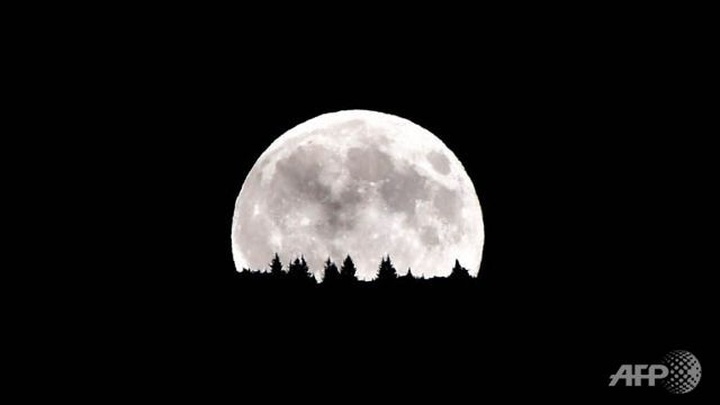
| The full moon nicknamed "the supermoon", rises over the Dolomiti mountains in Levico Terme near Trento in north of Italy on August 10, 2014. (AFP/GIUSEPPE CACACE) |
A supermoon occurs when the moon becomes full on the same days as its perigee - which is the point in the moon's orbit when it is closest to Earth - and when the sun, moon and Earth are lined up as the moon orbits Earth (known as syzygy).
While this phenomenon is not uncommon, what distinguishes the Nov 14 supermoon is that it would be the closest to Earth since 1948, making it an "extra-supermoon", said the US space agency. It would appear bigger and brighter than usual.
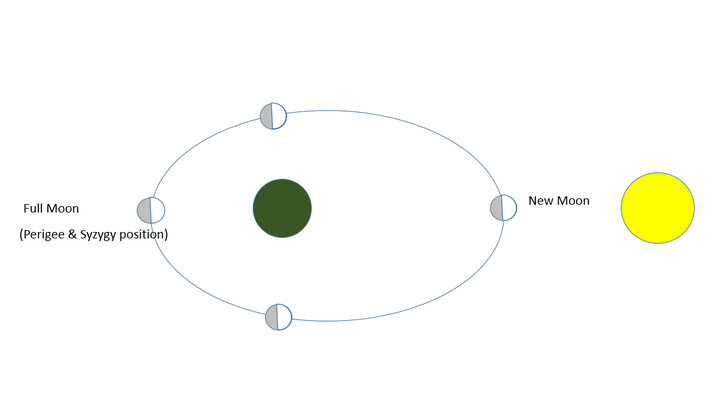
(Illustration: Singapore Science Centre)
The Nov 14 supermoon is expected to be at its biggest at 1352 GMT (9.52pm Singapore time), according to sciencealert.com.
We won't see it that big again until 25 Nov, 2034.
For skygazers in Singapore, the supermoon can be seen if there is no cloud cover. “You can view it from anywhere in Singapore that gives you a good view of the sky,” Dr Eileen Tan, deputy director of Physical Sciences at the Science Centre Singapore told Channel NewsAsia.
The Nov 14 supermoon is the second of three this year. The first was on Oct 16 and the other will be on Dec 14, said NASA.
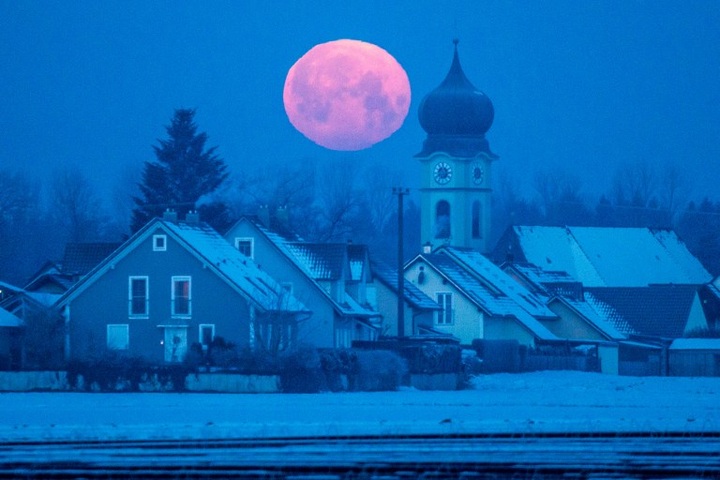
Full moon sets behind the parish church of Schoenach near Regensburg, southern Germany, on Feb 4, 2015.
(Photo: AFP/DPA/Armin Weigel)