
Despite recent petrol import tax cut, traders still complain about rising losses due to soaring prices in the world market.
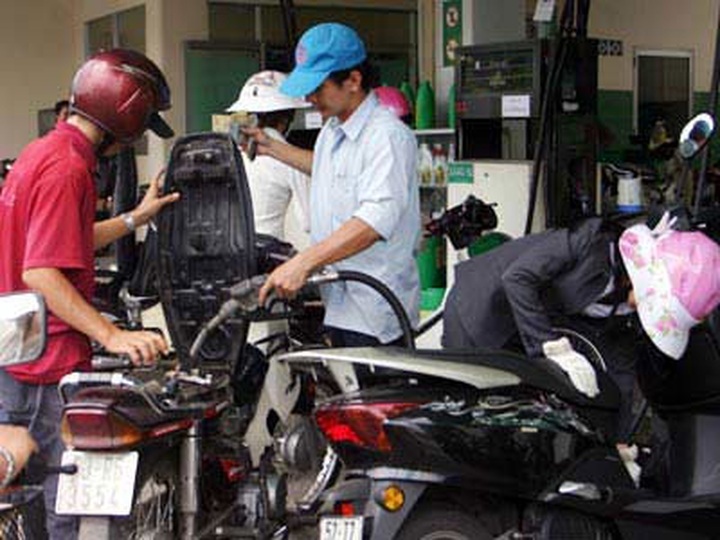
Traders dissatisfied with tax cuts
Many are worried that if no drastic measures are taken, a petrol price hike may be inevitable in March.
Vuong Thai Dung, Deputy General Director of Vietnam National Petroleum Corp (Petrolimex), said, “We are facing a lot of difficulties. The Ministry of Finance (MoF)’s recent cut in the petrol import tax is just a temporary fix for the domestic market, but not offset our mounting losses.”
According to Dung, after the tax reduction, the import price for 92 octane gasoline is still VND2,005 per litre higher than the current retail prices.
He said that this discrepancy also exists for other fuels: VND1,600 per litre of diesel, VND1,200 per litre of kerosene and over VND2,000 per litre of fuel oil.
Vietnamese traders complain that the price of refined fuel in the rest of the world continue to rise. As of February 27, 92 octane sold for USD134 per barrel in Singapore, compared to USD123.74 per barrel on February 21, while price of diesel increased to nearly USD138 per barrel, against USD131.26 per barrel one week ago.
An anonymous official from SaigonPetro said that the company was seeking approval from the MoF to raise prices by VND1,000-VND1,500 per litre before the tax cut on February 21.
“Our proposal was turned down. The tax reduction only covers VND600-700 per litre of our total losses,” he noted.
He said that, according the MoF’s estimates, traders should be able to break even with the tax cut in combination with using the extra VND1,400 from the price stabilisation fund. However, he claimed, in reality it is not enough to offset losses.
SaigonPetro has almost used up its allocated capital from the fund.
In addition to tax reductions, the stabilisation fund is a tool that has been used to bolster domestic petroleum firms by sharing financial risk. It has been criticised, however, due to a lack of funding.
According to international sources, petroleum prices on the world market may continue to rise through March and April due to political instability in the Middle East, a tense relationship between the West and Iran and soaring demand in the US.
Many in the industry say that it would have been better if Vietnamese authorities allowed an increase of between VND500 and VND1,000 per litre instead of cutting taxes. The tax tool, they say, should be reserved if the problem continues in future months.
Several experts worried that, in early March, the petroleum market could fall into the same situation as that of February-March of last year, resulting in increases of VND3,000-VND5,000 per litre, which would be a shock to the economy.
Domestic petroleum prices have been kept unchanged since October 10, 2011, at VND20,800 per litre of 92 octane, VND20,400 per litre of diesel 0.05S, VND20,200 per litre of kerosene and VND17,100 per litre of fuel oil 3%.


