Vu Trong Hong, chairman of the Vietnam Irrigation Association has warned about the dangers Vietnam could face when Laos build a new hydropower plant on the Mekong River.
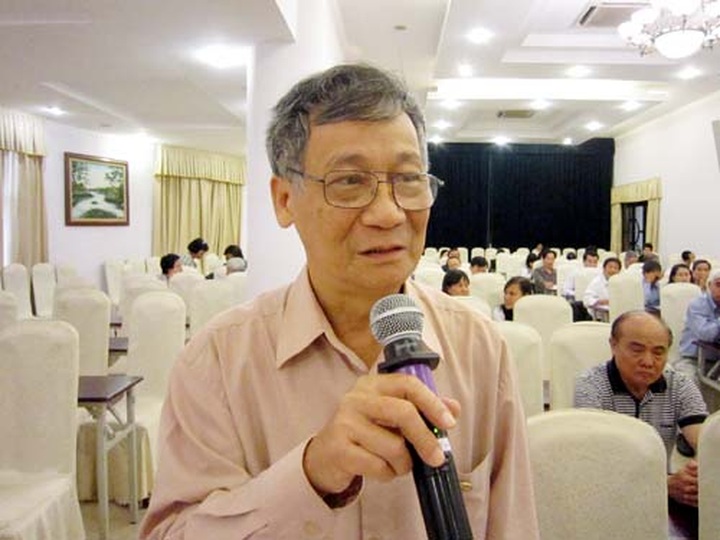
Vu Trong Hong, chairman of the Vietnam Irrigation Association
Laos announced that they were starting the 4,775 GWh per year Pak Beng hydropower project early next year. This will be their third power plant on the Mekong River despite warnings from the Mekong River Commission.
"In the future, the Mekong River will die," Vu Trong Hong, chairman of Vietnam Irrigation Association, said.
He went on to say that the river would die if other countries continue to build power plants, saying that they are still poor countries and have nothing else to depend on. Vietnam is definitely at a disadvantage as it is located at the mouth of the river. Other countries already dam the water while Vietnam needs suffers from water shortages.
He said, that hydropower plants were already a threat to the river’s ecosystem because fish and sediment can't move downstream and there aren’t sufficiently strong currents to prevent saltwater intrusion upstream.
"It's clearly more dangerous to us. More importantly, Thailand and Cambodia are carrying out projects to divert the water from Mekong River to other areas in their countries, reducing the amount of water in the river," Hong said. "Take the Red River as example, it hardly has any water now comparing to the past because China built eight to nine power plants upstream."
Hong said Vietnam should blame itself for not dealing with this problem sooner, such as finding ways to store water during the flood season or changing cultivation methods. Many experts had warned about the issue 10 years ago but it was ignored by the government.
Some people said the Mekong Delta region had huge amounts of underground water so there was no need to be worried. But Hong said the underground water in Vietnam was being polluted and it becoming more dangerous as the country has no solution to purify the underground water sources.
The Mekong River flows at 6,000 cubic metres per second but if Laos build another power plant, the rate will be reduced to just a few hundred cubic metres while Vietnam needs at least 2,000 cubic metres.
The Red River is also in danger. The minimum flow rate Vietnam needs is 800 cubic metres but now the average is only 700 cubic metres, according to the National Centre for Water Resources Planning and Investigation. At some sections, the water level is only 10cm.
"Sometimes, it was found out that the water in Red River doesn't flow at all, it means the river doesn’t have enough water to go the sea anymore," Hong said.
Vietnam needs to scale down its rice fields and the amount of exported rice. The Ministry of Agriculture and Rural Development had also warned about this but the authorities have never seriously considered the issue and found a solution.
Vietnam is exporting five million tonnes of rice per year. If each person uses about 160 litres of water a day and rice exports are cut by one million tonnes then the water that can be saved can benefit 60 million people.
Vietnam must also find ways to direct surface water underground to clean the water sources. However, even the plan to build reservoirs along the Mekong River has never been realised let alone addressing underground water sources, Hong said.
"The rivers and lake systems in Thap Muoi District, Dong Thap Province and Long Xuyen rectangular region were often used to store flood waters but people are filling them up to build houses and roads," he said.
As flood water is not stored, the Mekong Delta Region always faces severe water shortages during the dry season. This case is similar to the situation of Red River in Hanoi where people are encroaching upon the river. Thailand also decided to divert water from the Mekong River to help farmers, with people actually giving up their land for the project.
Hong also criticised the management and methods to industrialise the country. He said if the government wants Vietnam to become an industrial country then industry must increase its exports to ease the burden on the agriculture sector. But in reality, the agriculture and aquaculture are shouldering billions of USD in export value.
"We have to save ourselves. Let's learn from other countries and start storing water and reduce our rice exports. We have to make it our priority and assign specific responsibilities to officials," he said.