Trade turnover totalled USD206.76 billion during January - April, down 15.3% year on year, with those of FDI and domestic businesses at USD144.02 billion and USD62.74 billion, respectively dropping 15.1% and 15.8%, according to the General Department of Vietnam Customs.
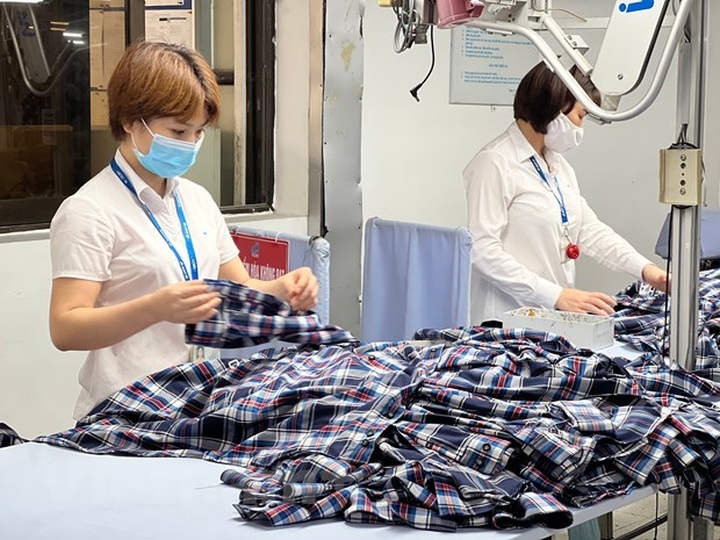
A garment factory in Vietnam (Photo: VNA)
The slow global economic recovery and tightened monetary policies in many countries have lowered the consumption demand in some major partners of Vietnam, leading to decreases of orders and a 13% fall in the four-month export revenue.
However, the FDI sector still recorded a trade surplus of USD14.18 billion as a result of USD79.1 billion in exports, down 12.4%, and USD64.92 billion in imports, down 18.3%. Meanwhile, the domestic one saw a trade deficit of USD8 billion .
In 2022, Vietnam shipped abroad USD371.5 billion worth of goods, including USD275.9 billion (or 74%) by FDI firms, statistics show.
The FDI sector plays a considerable role in the growth of the Vietnamese economy as seen in its contributions to export revenue, job creation, and formation of supply chains in key export industries like electronics, garment, and footwear production, said Phan Huu Thang, former Director of the Foreign Investment Agency at the Ministry of Planning and Investment, as cited by Dau tu (Vietnam Investment Review).
The continuous rise of trade surplus for the past nearly 10 years is partly attributed to the substantial role of FDI enterprises, which have helped Vietnam become one of the 20 largest trading economies. Its economy’s total foreign trade topped USD730 billion by the end of last year.
However, the overdependence on the FDI sector for export has also revealed certain problems. While domestic businesses have witnessed a serious trade deficit, large exporters, mainly FDI firms, in big export industries like garment, electronics, and footwear have had to apply lay-offs or furloughs due to order shortages.Economist Le Quoc Phuong pointed out that in recent years, export has grown strongly in just quantity instead of quality. The added value in overseas shipments is still lower than that in other ASEAN countries such as Thailand, Singapore, and Indonesia.
FDI businesses is in integral part of the economy, but it also is necessary to gradually improve the competitiveness of domestic firms and their engagement in supply chains for the FDI sector right in the domestic market, he noted.