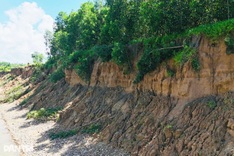
The grey-shanked douc population in Tam My Commune has grown from 25 individuals when it was discovered in 2018 to around 75, but experts warn the species remains threatened by habitat loss and human activities.
Tran Huu Vy, Director of GreenViet, said the grey-shanked douc is endemic to Vietnam and is listed as Critically Endangered in both the Vietnam Red Data Book and the International Union for Conservation of Nature (IUCN) Red List.
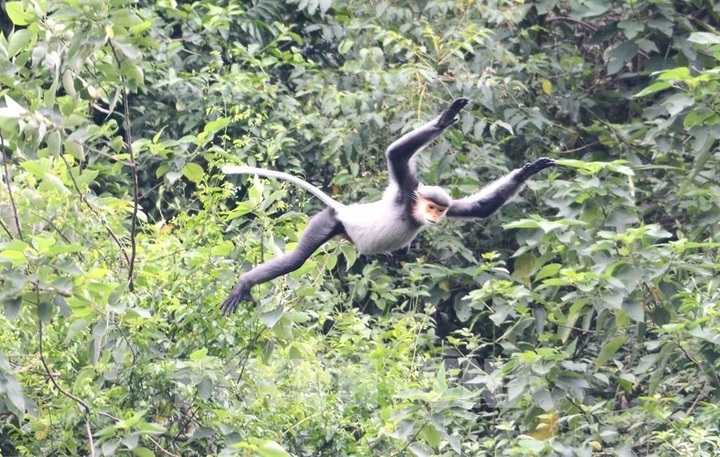
He estimated that only 1,500-2,000 individuals remain in the wild, living in forests across Danang, Quang Ngai, Gia Lai and Dak Lak.
"The recovery of the Tam My population is an encouraging result, but its long-term survival will depend on protecting and restoring its habitat," Vy said.
The 75 animals inhabit around 30 hectares of forest spanning Hon Do, Duong Bong, Hon Ong and Duong Ban Lau mountains. The area also supports a rich diversity of wildlife, including several protected mammal and plant species.
Accoding to Nguyen Quang Thanh, chairman of Tam My Commune People's Committee, the grey-shanked douc plays an important ecological role by dispersing seeds and helping regenerate natural forests.
Local authorities, conservation organisations and community groups have worked together to patrol forests, monitor wildlife, prevent illegal hunting and raise public awareness, contributing to the population's recovery over the past eight years.
Despite that progress, conservationists say the habitat remains fragile as agricultural expansion and other human activities continue to fragment the forests.
Tran Van Thu, head of Danang's Forest Protection Department, said conservation efforts would only succeed in the long term if local communities directly benefited from protecting the species.
"The increase from 25 to 75 individuals is a significant achievement, but it remains vulnerable," Thu said. "Protecting the species requires conserving its habitat while creating sustainable livelihoods for local people."
One of the biggest concerns is Hon Ong Mountain, where nearly 20 grey-shanked doucs survive in only about three hectares of remaining natural forest.
Conservationists say further habitat fragmentation could isolate the animals and reduce their chances of survival.
Huynh Cong Phuong, a member of a community conservation group, said residents wanted a greater role in protecting the species by taking part in decision-making, resource monitoring and benefit-sharing.
"Conservation can only be sustainable when local people become direct beneficiaries," he said.
Vu Thi Phuong Anh, president of Quang Nam College, proposed establishing a community conservation fund linked to eco-tourism.
Under the proposal, part of the revenue from entrance fees, tourism services, corporate sponsorship and ecosystem service payments would support both conservation work and local livelihoods.
She said residents could be paid to patrol forests, operate camera traps, collect biodiversity data, guide visitors and take part in environmental education programmes.