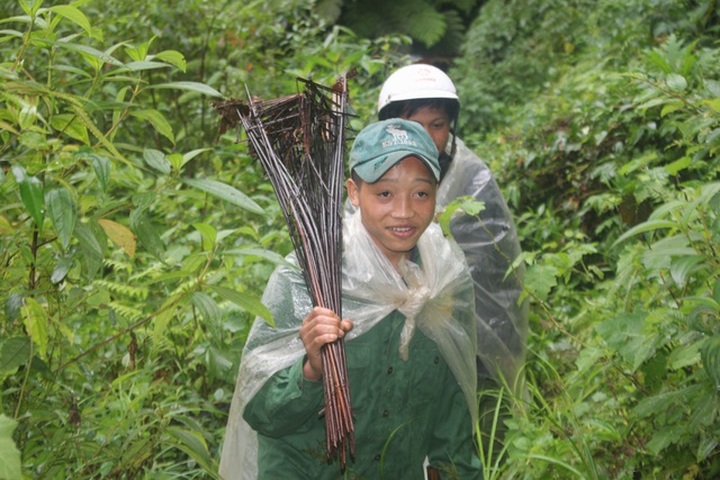
Preparing for a rat hunting
Xo Dang people know how to work on the terrace fields for a long time ago and this is also the biggest rice hub of the Tu Mo Rong District. Besides rice, there are various valuable herbs on Ngoc Linh Mountain including ginseng.

Ngoc Linh Mountain
36-year-old Gia A Ngom said, "Rats that are over three years old are the most tricky. As the ginseng starts maturing, they will steal the ginseng and bring it to their burrows. Since they target valuable ginseng, we call them aristocrat rats."
He continued saying that since the rats often eat ginseng, those rats are also very valuable. The locals often catch the ginseng-eating rats in spring as the offerings to the ancestors and gods and to treat visitors.
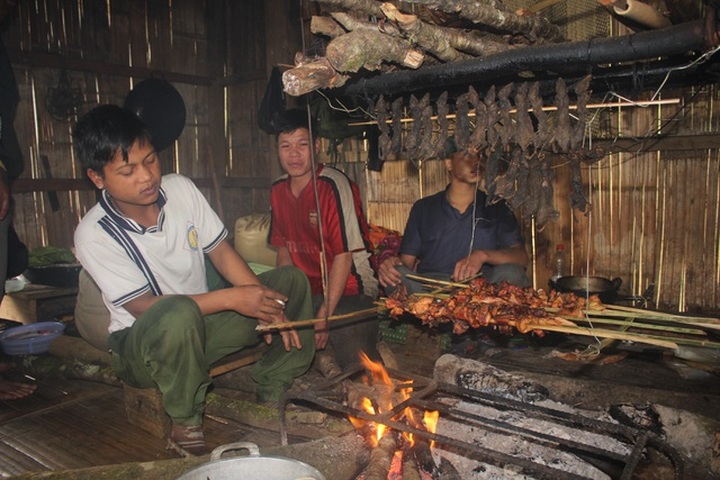
The ginseng-eating rats are special food for the locals
"The gardens are protected with trapping pits that have spikes. We take shifts to patrol to protect the gardens and place traps. Those rats are specialities during occasions like weddings," said 40-year-old A Chung. "We can track the rat tracks to place traps or put the traps near hollow trees or small burrows. Rats often appear in March or April when the ginseng produces flowers."
After one day, each person often catches three to four rats.
According to H'Lang, the rats are often cooked with bananas and wild bamboo shoots or stir-fried with chilli and lemongrass. Offering the ginseng-eating rats during weddings is a respectful gesture to the other families.
The Xo Dang People have two most important Tet celebrations in the year which are Giot Nuoc (Water Drop) and Lua (Fire). Everyone will gather together to distill wine and food and offer to the ancestors and gods what they have made in the year to call for a peaceful new year.