Covering about five hectares and branching into four inlets, the lake is ringed by rolling mountains and dense vegetation, creating a calm and secluded setting. Primary forest lines the shore, its colours reflected on the lake’s clear, jade-green surface.

The area is known for its sau sau, or sweet gum, trees, which grow up to 10 metres tall. While found across Cao Bang, they are most densely concentrated around Ban Viet Lake. From late autumn to early winter, the leaves turn from green to yellow and then vivid red, creating scenes reminiscent of European maple forests. (Photo: Thai Duong AC)

This winter, the colour change has been especially pronounced, with bright reds and yellows standing out against the blue-green water. December is widely regarded as the most scenic time to visit, when the lakeside forest appears ablaze with colour. (Photo: Thai Duong AC)

The lake is at its most atmospheric at dawn and dusk. Morning mist drifts across the water as first light filters through the trees, while at sunset gentle ripples catch the fading sun, creating a tranquil, reflective mood. (Photo: Thai Duong AC)

Sweet gum trees are common in Cao Bang, but Ban Viet stands out for its mirror-like waters. This year’s red-leaf season lasted only about two weeks, and the lake remains largely undeveloped for tourism. (Photo: Hoang Duong)

Photographers often use drones to capture aerial views, while visitors are advised to observe from safe vantage points nearby. Ban Viet Lake lies about 13 kilometres north of Trung Khanh, close to Ban Gioc Waterfall and other major attractions. (Photo: Pham Hoang Cuong)
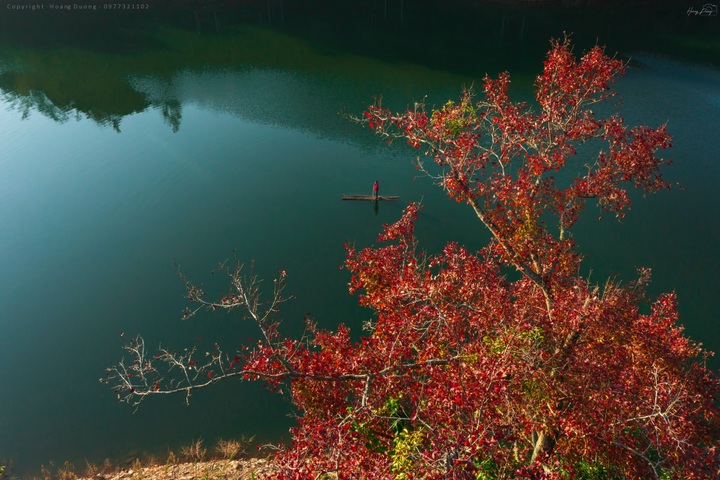
With its unspoilt surroundings, the lake is well suited to camping, trekking or quiet retreats. Early mornings offer the best views, though visitors are advised to dress warmly as temperatures can drop to around 10 degrees Celsius. (Photo: Hoang Duong)