The worship of the Holy Mother was officially recognised by UNESCO as an intangible cultural heritage of humanity on December 1.
The recognition was announced at the 11th session of UNESCO’s Intangible Cultural Heritage Committee in Addis Ababa, Ethiopia.
According Ambassador Pham Sanh Chau, Head of the Foreign Ministry's Culture and UNESCO Department, this is the first time UNESCO has honoured Vietnamese women through the image of the Mother Goddess.
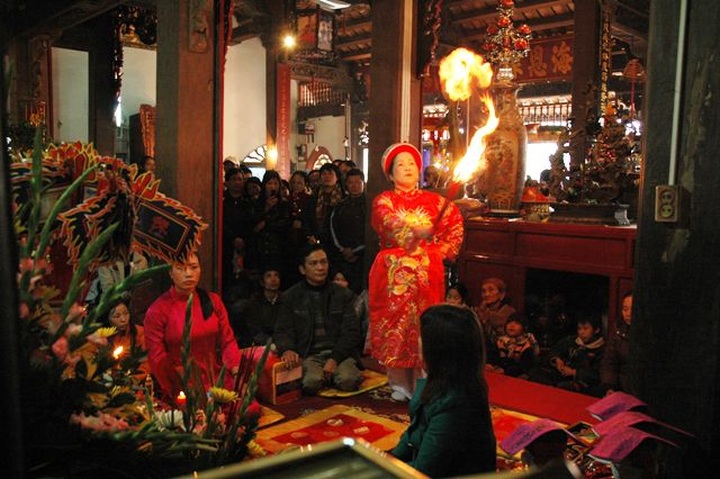
Hau dong (going into trance) is a traditional ritual dedicated to Mother Goddesses
The practice rituals meet belief-related needs by people in their daily life and have been closely associated with historical and cultural figures, such as Lieu Hanh, Au Co, Vuong Mau (legendary Mother of Saint Giong).
The worship involves Hau dong (going into trance) and Hat chau van (trance singing and dancing) and festivals. It has been practiced in numerous northern mountainous provinces since at least the 16th century. In recent years, Mother Goddess worship has increased in popularity. The Phu Day festival in Nam Dinh Province attracts tens of thousands of followers each year.
The practitioners are comprised of temple guardians, ritual priests, spirit mediums, assistants, musicians who perform the songs for the spirits, disciples and lay adherents who share the same beliefs in the spiritual power, supernatural strength and protection of the Mother Goddess spirit pantheon. All of these practitioners form groups who worship together, take part in traditional festivals and perform spirit possession rituals at temples and palaces dedicated to Mother Goddess.
In 2014, Vietnam sent the dossier to UNESCO for the recognition of Mother Goddess worship as an intangible cultural heritage.
This is Vietnam’s 10th intangible cultural heritage of humanity recognised by UNESCO.