Land prices in Vietnam have started to fall after a prolonged period of growth, while villa and townhouse prices have also softened in several localities, according to the Ministry of Construction's second-quarter 2026 property market report.

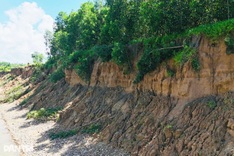
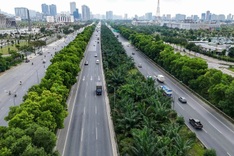
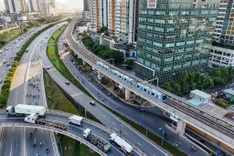
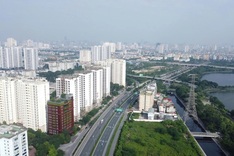
Land plot prices at many projects fell by 3-6 per cent, while villa prices also declined (Photo: TN).
The report shows that price declines are emerging across multiple segments of the secondary market. In addition to apartments, which had already recorded corrections from the previous quarter, residential land plots, villas and townhouses also saw prices ease.
Average asking prices for residential land in development projects fell by around 2-3 per cent compared with the first quarter. Nationwide, average asking prices declined by about 2.5 per cent to VND 40 million (USD 1,530) per square metre. In Ho Chi Minh City, asking prices fell by nearly 3 per cent to around VND 66 million (USD 2,530) per square metre.
Transfer prices at many projects also dropped by 3-6 per cent from the previous quarter, particularly for high-value properties or assets facing selling pressure.
The Ministry of Construction said the decline was mainly driven by weaker liquidity, persistently high financing costs and a shift in investor preferences towards properties that meet genuine housing demand, have clear legal status and offer stable income potential.
Despite the correction, land prices remain elevated in many areas.
In Hanoi, residential land at Cienco 5 Me Linh Urban Area was priced at around VND 40-56 million (USD 1,530-2,150) per square metre, while Minh Giang Dam Va Urban Area ranged from VND 30 million to VND 47 million (USD 1,150-1,800). Prices at Dai Kim-Dinh Cong New Urban Area stood between VND 105 million and VND 160 million (USD 4,020-6,130) per square metre.
In Ho Chi Minh City, land at Van Phuc City was quoted at around VND 100 million-150 million (USD 3,830-5,750) per square metre, while Rio Vista ranged from VND 95 million to VND 110 million (USD 3,640-4,210). Long Thuan Residential Area was priced at approximately VND 58 million-63 million (USD 2,220-2,410) per square metre.
Other markets remained relatively stable. Nam Hoa Xuan in Danang was quoted at around VND 66 million-70 million (USD 2,530-2,680) per square metre, while Izumi City in Dong Nai Province ranged from VND 57 million to VND 61 million (USD 2,180-2,340).
The ministry said the land market was undergoing a correction phase after a period of rapid growth, moving towards a more balanced state. Projects with favourable locations and complete legal documentation continued to record stronger liquidity than the broader market.
A similar trend was seen in the villa and townhouse segment. Transaction prices in many localities fell during the second quarter, with some areas recording adjustments because of slower sales activity.
However, absolute prices remain high. In Hanoi, villas and townhouses at Sunshine Riverside were priced at around VND 390 million-440 million (USD 14,940-16,860) per square metre, while The Zei ranged from VND 375 million to VND 380 million (USD 14,360-14,550). Imperial Plaza stood at VND 328 million-337 million (USD 12,560-12,910), and Louis City at VND 285 million-292 million (USD 10,910-11,180) per square metre.
In Ho Chi Minh City, The Global City was priced at approximately VND 360 million-371 million (USD 13,790-14,210) per square metre, while Saigon Mystery Villas ranged from VND 312 million to VND 320 million (USD 11,950-12,260). Lakeview City was quoted at around VND 220 million-250 million (USD 8,430-9,580) per square metre.
The price correction has coincided with weakening demand. The residential land segment recorded 73,438 successful transactions during the second quarter, equivalent to only 67.4 per cent of the previous quarter's volume and 59.9 per cent of the level recorded a year earlier.
Higher borrowing costs have added further pressure. The Ministry of Construction said mortgage rates generally range between 12 and 14 per cent per year. Many loans have shifted to floating rates of 13-15 per cent after promotional periods expire, while some banks charge as much as 15-16 per cent annually.
Rising financing costs are weighing on buyers and placing additional pressure on developers and investors with high levels of financial leverage.