
The Vietnamese government on March 9 issued Decree 72/2026 adjusting most favoured nation import tariff rates on several petroleum products and raw materials used in fuel production.
Under the decree, the MFN tariff on unleaded motor gasoline will fall from 10 per cent to 0 per cent. The measure applies to products under HS codes 2710.12.21, 2710.12.22, 2710.12.24 and 2710.12.25, as well as blending components such as naphtha and reformate classified under HS code 2710.12.80.
MFN import duties on diesel fuel, fuel oil, aviation fuel and kerosene will also be reduced from 7 per cent to 0 per cent.
In addition, several petrochemical feedstocks including xylene, condensate and p-xylene will see tariffs cut from 3 per cent to zero, while other cyclic hydrocarbons will drop from 2 per cent to zero.
The Ministry of Finance estimates the tax reductions will reduce state budget revenue by about VND 1.024 trillion (about USD 40.2 million) during the implementation period.
In documents previously submitted to the Ministry of Justice for review, the finance ministry warned that prolonged tensions in the Middle East could disrupt global fuel supply and drive prices higher, posing risks to Vietnam’s domestic energy security.
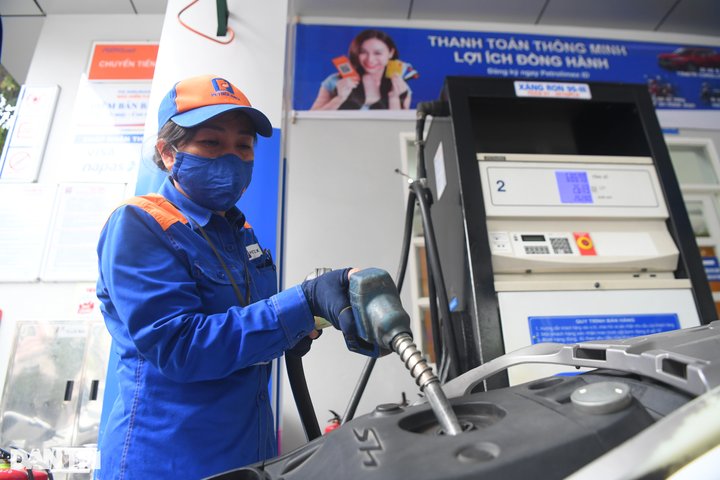
Staff assist customers with refuelling (Photo: Manh Quan).
According to the ministry, conflict involving the United States, Israel and Iran has significantly affected global petroleum trading. In particular, any blockade of the Strait of Hormuz, a key route for global oil shipments, could halt the movement of about 20 million barrels of crude oil a day from the Middle East to refineries, especially in Asia.
As a result, several regional refineries may have to cut production, rely on crude reserves and limit exports of refined petroleum products, which would push fuel prices higher.
Within Vietnam, some refineries could also face difficulties if imported crude oil supplies are disrupted, potentially affecting existing delivery contracts.
At present, most of Vietnam’s fuel imports come from ASEAN countries and South Korea, where tariffs are already largely zero under free trade agreements. However, tighter global supply could make it harder to source refined fuel from these markets.
The finance ministry said adjusting MFN tariffs would encourage major fuel importers to seek supplies from countries that do not yet have free trade agreements with Vietnam. The move is intended to help stabilise supply and ensure national energy security.
The decree takes effect from March 9 until April 30, 2026. If necessary, the Ministry of Industry and Trade will review the situation and propose an extension to the Ministry of Finance for submission to the government.


