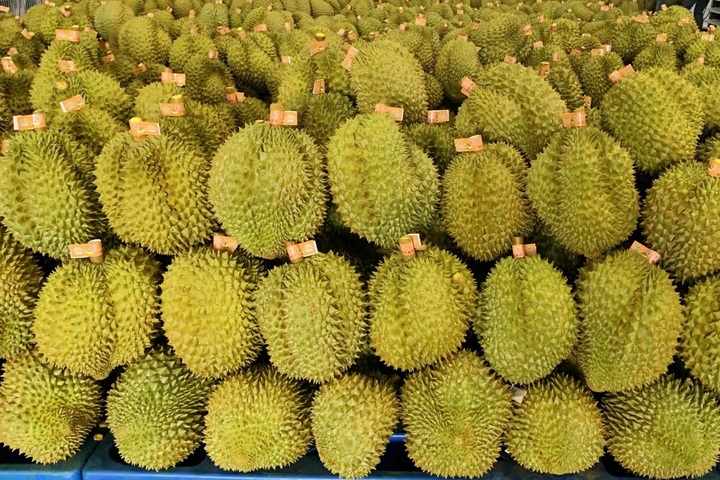
According to the Indian Embassy in Hanoi, the Indian government has issued the fifth amendment to its Plant Quarantine Order in 2026, adding Vietnam to the list of countries permitted to export fresh durian to India.
Notably, Indian authorities do not require additional phytosanitary declarations on phytosanitary certificates and have not imposed special import conditions on fresh Vietnamese durian. The move is expected to enable exporters to begin shipping their first consignments in the near future.
Dang Phuc Nguyen, general secretary of the Vietnam Fruit and Vegetable Association, said India represents a highly promising market with a population of more than 1.4 billion, a rapidly expanding middle class and growing demand for high-quality imported food and agricultural products.
However, he cautioned that market access is only the first step. Durian remains a relatively unfamiliar fruit for much of the Indian population. In the early stages, demand is expected to be concentrated in major cities, premium retail chains, imported fruit stores, restaurants, hotels and e-commerce platforms.
Exporters therefore need to carefully study consumer preferences, purchasing power, preferred durian varieties, packaging requirements and suitable pricing strategies. Logistics will also be critical, as shipping to India involves longer distances than exports to China, while fresh durian has a limited shelf life.
Nguyen said that if food safety standards are maintained and production chains are reorganised more effectively, Vietnam's durian exports could stabilise at between USD 4.5 billion and USD 5 billion annually.
He added that India is not only a new market but also a test of the Vietnamese durian industry's ability to manage production, logistics and brand development.
The Vietnam Trade Office in India described the country as a large and promising market for Vietnamese durian. Air freight may be suitable for initial shipments of fresh fruit, while sea freight could reduce costs but would require companies to master preservation and post-harvest processing technologies.
Frozen durian, peeled durian segments and other processed products may offer a more practical route for large-scale market penetration, the office said.
Nguyen Quoc Manh, deputy director general of the Department of Crop Production and Plant Protection under the Ministry of Agriculture and Environment, said durian has been one of the fastest-growing agricultural sectors in Vietnam over the past decade, particularly during the last five years.
Between 2020 and 2025, the country's durian cultivation area nearly tripled, reaching about 195,000 hectares by the end of last year.
Output also rose sharply, increasing from around 600,000 tonnes in 2020 to 1.8 million tonnes in 2025, and is expected to exceed 2 million tonnes this year.