At a meeting with the first 10 members of the Vietnam International Financial Centre in HCM City (VIFC-HCMC), held as part of the 2026 Autumn Economic Forum, Deputy Prime Minister Nguyen Van Thang said the focus must now shift from establishing the organisation to making it operational, from attracting members to developing the market, and from investment pledges to actual transactions and capital flows.
The immediate priority is to put the centre into substantive operation and strive to complete its first transactions in November.
Prioritising products and transactions ready for launch
According to information released at the meeting, the first 10 members of VIFC-HCMC have registered and committed a total of USD 33.63 million in charter capital contributions. Their investment commitments are expected to reach around USD 2.7 billion in 2026-2027 and a cumulative USD 3 billion by 2030. Since officially beginning operations in early February, the centre has also recorded tens of billions of dollars in investment commitments from domestic and foreign investors and partners, according to the report.
Thang, who chairs the centre's executive council, said demand for capital mobilisation in education, infrastructure, energy and logistics was substantial, as was demand for investment funds, asset management, financial services, payments and financial technology applications.
The key, he said, was to select products and transactions that could be launched immediately, rather than spreading resources across a wide range of offerings without generating actual activity.
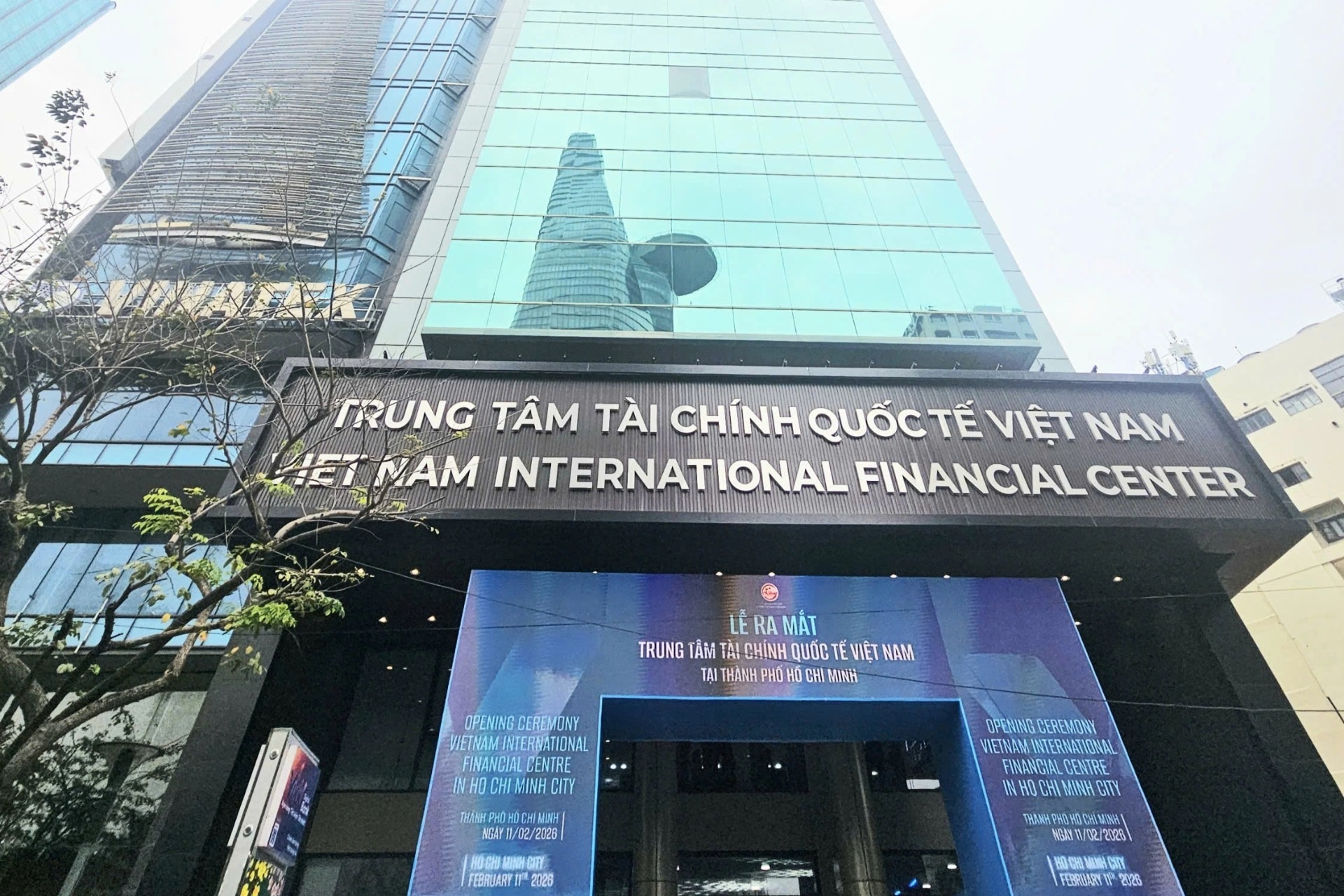
VIFC-HCMC has been instructed to begin transactions from November (Photo: Lam Giang).
"We should strive to secure transactions as early as November, while fully meeting requirements on licensing, financial safety, foreign exchange management, anti-money laundering and investor protection," Thang said. "The aim is to establish lawful and viable transactions that can be replicated and build market confidence in the initial phase."
Beyond the capital commitments to VIFC-HCMC, the HCM City People's Committee has announced a list of 12 projects that have received in-principle investment approval or investment registration certificates, with total investment of around USD 13.5 billion, Dantri reported.
Among them is the Swift Logistics project, with investment of about USD 987.40 million, to be developed by Singapore-based TOKGISTIC PTE. LTD. The project is registered in postal and courier services, market research and management consultancy, with operations expected to begin in the fourth quarter.
Another technology project, operated by ITO Automation Technologies Vietnam Co. Ltd., has received an investment certificate for USD 8 million. It will focus on manufacturing automation equipment, robots and sensors, as well as developing data management solutions.

A general view of the Autumn Economic Forum 2026 recently held in Ho Chi Minh City (Photo: Organising Committee).
Success measured by disbursement and wider economic impact
For capital to make a meaningful contribution to the economy, particularly to innovation and science and technology in HCM City, the priority is to ensure that investment commitments are actually disbursed.
Huynh Phuoc Nghia, a lecturer at the University of Economics Ho Chi Minh City, told Dantri that the gap between pledged capital, often formalised through agreements and memorandums of understanding, and actual disbursement remained a major challenge in attracting investment. Many localities announce billions of dollars in commitments, but turning those pledges into money flowing into the economy is a difficult process, he said.
To accelerate actual disbursement, authorities and regulators need to accept risks within controlled limits and introduce streamlined, coordinated one-stop administrative procedures. Faster processing would not only help capital reach projects sooner but also strengthen international investors' long-term confidence, Nghia said.
Such confidence cannot be built on vague promises or vacant plots of land with unclear legal status. It must be underpinned by specific, transparent projects and, crucially, capable domestic partners.
Vietnam needs to develop strong local companies with the scale, management expertise and financial capacity to partner with foreign investors and absorb incoming capital, he said.

Engineers at Intel Vietnam's factory (Photo: N.P).
At the 2026 Autumn Economic Forum, Prime Minister Le Minh Hung held a dialogue with Stephan Mergenthaler, managing director of the World Economic Forum, on the theme "Positioning Vietnam in the global future".
The PM said Vietnam was focusing on developing modern, integrated infrastructure and accelerating science and technology, innovation and digital transformation. The government was also pursuing policies to strengthen the capabilities of Vietnamese businesses, with priority given to helping them gradually master technologies.
He said the country would promote links between domestic and foreign-invested companies and selectively attract investment tied to technology transfer, technological self-reliance, high-quality workforce training and higher domestic value added.
In a message to the business community, the prime minister stressed that companies should bring more than capital. They should also share technology, knowledge and management expertise, train workers and promote innovation, particularly in key industries.
International corporations can help Vietnam improve productivity, develop industrial ecosystems, strengthen business links and enable Vietnamese companies to participate more deeply in global value chains, he said.
Alongside confidence, investors also need opportunities arising from a favourable policy environment, a sound legal framework and attractive project returns, Nghia said. International investors seek to maximise financial performance while minimising operational risks.
Don Lam, co-founder and chief executive of VinaCapital, said capital needed viable investment opportunities, with an increasing share of funding flowing towards technology.
Technology would be a key driver of Vietnam's growth in the coming years, he said, adding that HCM City had favourable conditions to play a leading role, including a skilled workforce, dynamism and an entrepreneurial spirit that could help it become a regional technology hub.
However, bringing capital into the market also requires greater outreach to potential investors, encouraging them to register and participate more actively in VIFC-HCMC. The city is also seeking to strengthen its innovation ecosystem as it develops into an internationally competitive megacity.
Nguyen Van Duoc, chairman of the HCM City People's Committee, said the city was pursuing three main priorities: institutional reform; expanding new sources of growth and pioneering breakthrough policies to promote science, technology and innovation; and broadening international cooperation to attract global resources.
The city also aims to promote public-private partnerships and strategic investment in research and development, high technology, education and healthcare, he said.
Nghia said the ultimate goal of actual capital disbursement should go beyond building factories, creating jobs or generating short-term tax revenue, particularly when tax incentives may reduce immediate receipts. The broader priority for economic management is to build the economy's internal capacity.
This means that every dong of foreign investment should help generate an additional VND 1.5-2 in economic value added across domestic industries, he said. High-quality capital should act as a catalyst for the development of the wider ecosystem.
"Innovation cannot be achieved through superficial campaigns or formalistic activities. Attracting high-quality capital into innovation requires a generation of strong, capable domestic businesses," Nghia said. "Genuine innovative enterprises need sustained support and funding over many years for research and development, enabling them to create inventions, innovations and commercially valuable intellectual property."
Only when capital is connected to supply chains and strengthens the economy's internal capabilities can investment become a lasting driver of sustainable growth.
To accelerate VIFC-HCMC's operations, Deputy Prime Minister Thang called for immediate action to remove bottlenecks directly affecting pioneering transactions, particularly those involving account mechanisms, foreign exchange, payments and the operations of member banks.
Authorities should also address the conditions and procedures for establishing and operating investment funds, asset management companies and investment firms, as well as develop controlled testing mechanisms for new financial products and business models within the limits of their authority and the law.
For new financial products, innovation should be encouraged, but the scope of testing, the responsibilities of all parties and mechanisms to protect customers and investors must be clearly defined, he said.