
The municipal People’s Committee has approved a human-resources development plan for the urban railway network for 2025 to 2030, with a long-term vision to 2050.
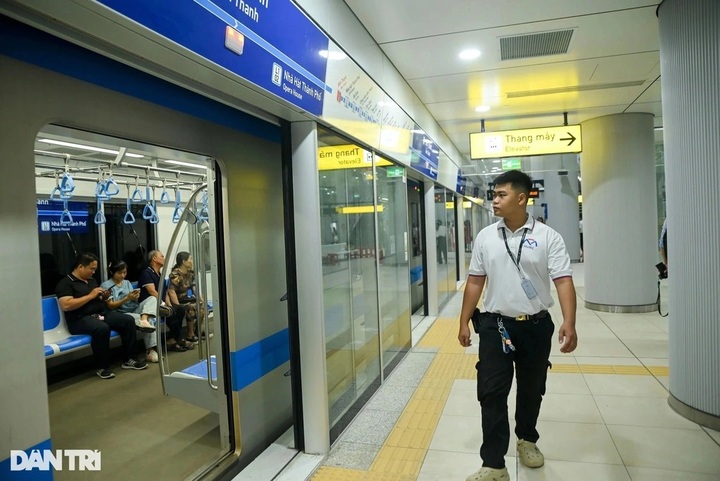
The Ben Thanh-Suoi Tien metro line (Photo by Trinh Nguyen).
Metro operations will require about 720 staff in 2025. The number is projected to reach 11,840 when seven lines open in 2035 and 17,730 once the network expands to 10 lines in 2045.
Beyond operations, the city will need thousands of engineers and workers for design, construction, maintenance and project delivery. Engineers and construction workers alone are expected to exceed 21,000 in 2035 and 20,000 in 2045.
The plan states that State-management and metro project-management personnel remain limited and lack specialised training, with many seconded from sectors such as transport, construction and urban planning.
The shortage has hampered design appraisal, technical oversight and risk management, leaving the city dependent on foreign experts, particularly for design, rail engineering, trial operations, technology transfer and operational supervision.
The city aims to train about 60 specialised State-management officials to international standards by 2045 to improve planning assessment, technological oversight, risk management and metro-related policy advice.
Meanwhile, the project-management workforce is expected to grow from 160 people in 2025 to 310 in 2035 and 400 in 2045, covering planning, schedule control, quality supervision and technical coordination for large metro projects.
The city also plans to send at least half of its metro specialists abroad each year for training programmes focused on global operating models, safety standards and new technologies.


