Competition in the low altitude economy is intensifying in Vietnam, with major technology companies beginning to position themselves in the field.
Tran Kim Chung, chair of CT Group, said LAE should not be seen as a single industry but as a comprehensive economic ecosystem integrating green growth and the digital economy.
“This is an economy that exploits low altitude airspace resources, with productivity far exceeding traditional models,” Chung said.
He cited sharp productivity gains as a defining advantage. In agriculture, a single unmanned aerial vehicle can spray and monitor up to 67 hectares in one day, compared with a maximum of one hectare handled by a skilled worker. In the power sector, one hour of UAV inspection work can equal three days of manual labour.
Such gaps, measured in multiples rather than percentages, are what make the low altitude economy a key driver of economic transformation, Chung said.
Globally, China began deploying LAE in 2023 with an initial scale of nearly USD 70 billion and forecasts that it could exceed USD 500 billion by 2025. In south-east Asia, Indonesia has also established a low altitude economy committee.
In Vietnam, momentum is building quickly. Ta Ngoc Thanh, director of the high technology development centre at HTI Group, said businesses increasingly view LAE not just as a new sector but as a strategic economic pillar capable of generating service and industrial ecosystems worth tens of billions of dollars.
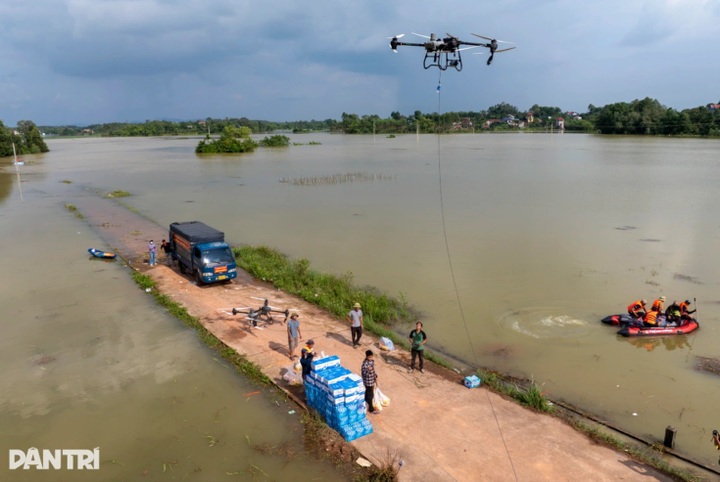
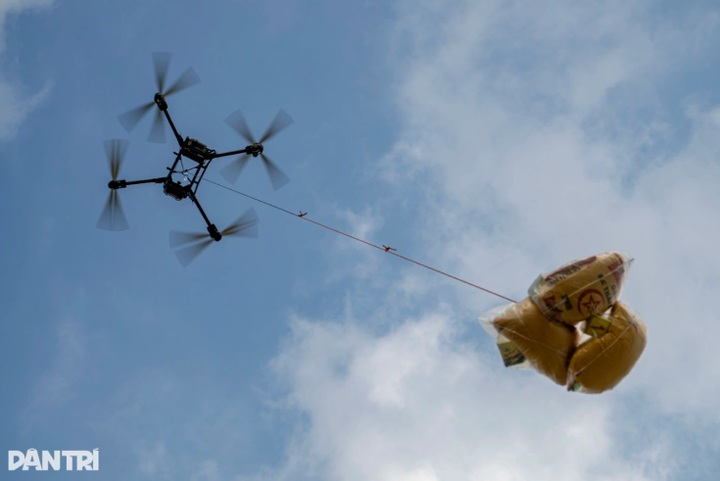
According to Thanh, these ecosystems are already extending into daily life, from emergency logistics and precision agriculture to infrastructure management and, critically, security and disaster response.
Pham Tuan Anh, chief executive of Vietnam Technology and Communications Joint Stock Company, said the global LAE market remains immature, with most countries still at the same starting line.
Vietnam, however, holds a distinctive advantage because of its role in Chinese and global supply chains. If leveraged well, the country could move quickly and secure key positions in the sector’s early stages, he said.
Thanh agreed, noting that Vietnam’s diverse terrain and rapid urbanisation create fertile ground for LAE. More importantly, domestic technology firms have grown stronger.
“The maturity of local tech companies allows Vietnam to gradually master UAV platforms, data and control systems, laying the foundation for sustainable low altitude economic development,” he said.
Chung added that LAE could help Vietnam address long-standing challenges such as traffic congestion, environmental pollution, climate change adaptation and food security, potentially reshaping urban planning.
Despite strong potential and growing corporate capacity, experts said policy constraints remain a major obstacle.
Pham Tuan Anh pointed to restrictive regulations on UAV testing. Tight and complex procedures mean students and researchers often have no legal space to test drones or algorithms, sometimes forcing them to operate unofficially, he said.
The absence of legal testing zones risks stifling innovation at an early stage, making it difficult for start-ups and young researchers to turn ideas into commercial products.
Experts broadly agreed that sandbox models and living labs offer a solution. Vietnam could designate areas of several hundred to several thousand hectares as experimental urban zones.
Locations such as Binh Duong or western and northern parts of Ho Chi Minh City, with ample land and developed infrastructure, were cited as suitable for large-scale living labs. In these zones, students and companies could test delivery drones, flying taxis and smart urban management systems without rigid administrative constraints.
“If the creative community has space, equipment and a supportive supply chain, Vietnam can achieve major breakthroughs,” Pham Tuan Anh said.