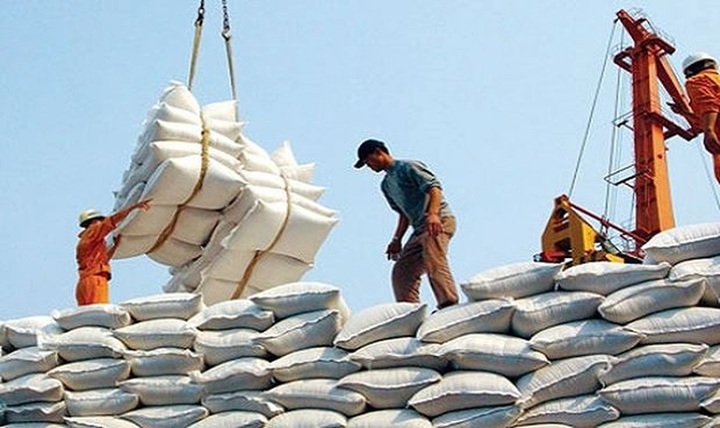
Vietnam’s agriculture and environment sector has set a target of USD 73-74 billion in agro-forestry-aquatic export earnings in 2026, requiring continued market opening and higher export efficiency, according to Deputy Minister of Agriculture and Environment Phung Duc Tien.
Speaking at the ministry’s regular press briefing on January 6, Tien said the year ahead is expected to be more challenging than 2025. However, more than 40 years of Doi moi (Reform) experience and recent agricultural restructuring have created a strong foundation for further growth.
He said the sector is now better integrated into global markets and has steadily diversified export destinations. Alongside traditional partners, shipments to Europe and Africa have grown strongly, while the Middle East is also seen as a market with considerable potential, complementing Asian destinations and niche segments.
Despite countervailing duties imposed by the US, restructuring of production, proactive trade promotion by businesses and more systematic organisation of raw-material areas provide a solid basis to pursue the USD 73-74 billion export target, Tien said.
The Ministry of Agriculture and Environment warned that by 2026 the sector will face increasing pressure from climate change, resource depletion, pollution and biodiversity loss, posing risks to food security and livelihoods. At the same time, broader management demands and international commitments on emissions reduction, green growth, nature conservation and low-emission agriculture will strain resources and governance capacity.
In response, the ministry plans to strengthen resource management, environmental protection and climate resilience, while optimising the value of land, water, forests and biodiversity to support sustainable agriculture and socio-economic development.
To raise value added, solutions will be rolled out across the entire chain, from raw-material zones and standards to processing, logistics and markets. Production areas will be standardised in line with market demand, with expanded planting and farming area codes, stricter control of inputs, food safety and traceability, and closer alignment with good agricultural practices, organic and sustainability standards.
The sector will also accelerate deep processing and product diversification, prioritising investment in processing, preservation and packaging technologies, while making fuller use of by-products to create new value chains.
Logistics costs are to be reduced through investment in cold storage, cold-chain systems and regional logistics centres, alongside streamlined transport and digital customs procedures. Market-access capacity and national branding will be strengthened through trade negotiations, management of technical barriers, market forecasting, and the development of product brands and geographical indications.
Green transition will remain a key priority, targeting higher-value market segments by cutting carbon footprints, obtaining sustainability certifications and adopting circular, low-emission production models.
Despite global uncertainty in 2025, the sector met and exceeded all nine targets set by the Government. Overall growth reached 3.78 per cent, while agro-forestry-fishery export turnover totalled USD 70.09 billion, up 12 per cent year on year, with social and environmental indicators also showing improvement.