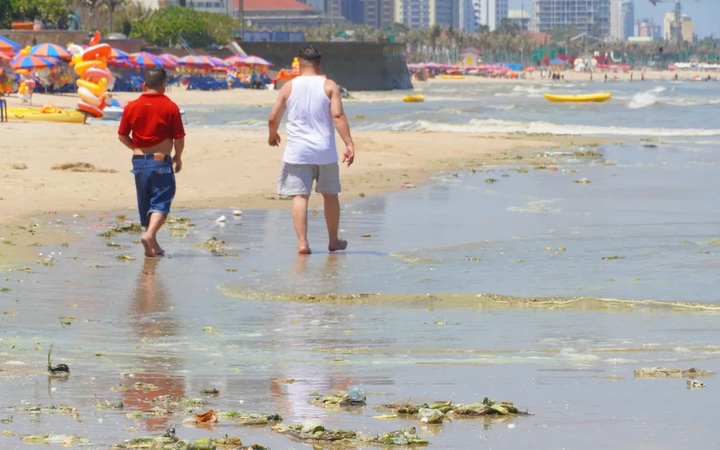
On April 7, officials in Vung Tau Ward, Ho Chi Minh City, said inspections at local beaches have been intensified on an hourly basis to detect abnormalities such as water colour, odour, surface films and drifting waste.
In recent days, videos circulating on social media showed thick layers of white foam covering parts of the beach, drawing widespread attention. Earlier, seawater in some coastal areas had turned green and even purple, raising concerns among residents and tourists.
Local authorities said the phenomenon was recorded at around 3 am on April 5 near Tam Thang Tower in Bai Sau. At the time, the foam appeared dense but had no foul smell and did not cause discomfort. Officials believe it is a natural occurrence linked to strong microalgae growth.
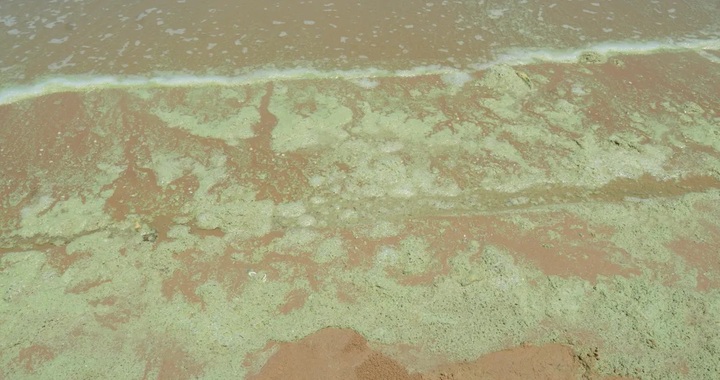
A report from the ward also noted that as the tide receded, some areas showed pinkish-purple films accompanied by a fishy odour from decomposing seaweed and marine organisms. Waves also carried patches of green algae onto the sand, along with small dead fish, affecting the beach’s appearance.
Authorities quickly deployed teams to clean up and restore the environment. The situation has since stabilised, with seawater conditions returning to normal.
According to local officials, similar incidents have occurred previously and were attributed to seasonal algae blooms, particularly during periods of hot weather.
On the afternoon of April 5, the Institute of Marine Engineering collected water samples from affected areas for analysis and assessment.
Vung Tau Ward has reported the incident to the departments of agriculture and environment, and science and technology, while requesting further studies to determine the cause and recommend response measures should the situation recur.