Vietnam's public debt will climb to a unhealthy levels by the end of next year, according to the latest statistics given by the government.
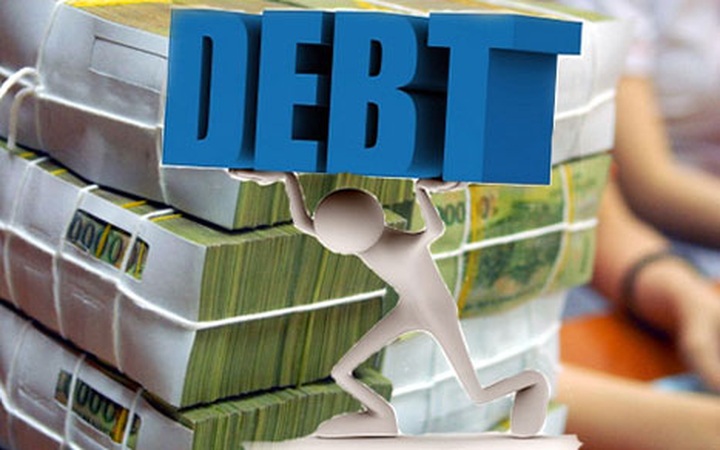
The NA Standing Committee reported that this year public debt would reach 60.4% of the GDP, and 64% by 2015. Early this year, the Ministry of Finance reported that public debt accounted for 53.4% of the GDP as of the end of 2013, and that government debt was 41.5% of the GDP, still lower than the 65% and 55% targets set by the legislature.
Despite pressure to pay down the debt, government reports still indicated that public debt was at a safe level. Several experts have raised attempted to bring attention to the issue, saying that the debt-to-GDP ratio is not important. According to these experts, the ability to repay and the efficiency of public investments are the key factors. Since 2012, Vietnam has had to take out new loans to pay off debts. In 2014, the government borrowed a total of VND70 trillion (USD3.3 billion) to pay old loans.
Statistics from the National Institute for Finance revealed that, in the first quarter of 2014, the state had to pay debts of nearly VND30 trillion. The economist Dinh Tuan Minh said that once debt reaches dangerous levels, creditors will refuse to lend or will do so at high interest rates. This would lead to austerity measures that would be very damaging to the economy, he said.
In addition, public debts would damage the government's credibility in the restructuring process and make Vietnam far less attractive to foreign investment.
Economist Vu Dinh Anh said it would be difficult stop the borrowing at this point, because the country is already taking out loans just to pay off old debt. In addition, there are several large projects underway that are in need of funding. His solution to the problem is to increase the GDP, but admitted that this solution is long-term and difficult.
On October 14, the global debt clock on the Economist website showed that the public debt in Vietnam was over USD84.6 billion, or 47.3% of GDP.