Several diamond retailers in Ho Chi Minh City have suspended operations as a surge in customer buy-back requests strains liquidity following a major diamond smuggling investigation.
As durian harvest peaks in the Central Highlands region, experienced buyers judge ripeness by sound, a skill that can earn them more than VND 1 million (USD 38) a day.
Vietnam generated nearly USD 1 billion from pepper exports in the first six months of 2026, with the United States remaining its largest overseas market.
Vietnam's aviation market expanded in the first half of 2026, driven by strong international travel despite persistent operational and infrastructure pressures.
Danang City will host its first international Ngoc Linh ginseng festival next month as the city seeks to promote the country's prized medicinal herb and expand the country's herbal medicine industry.
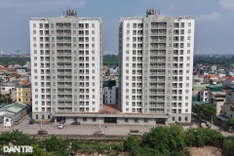
New apartments priced below VND 50 million (USD 1,910) per square metre are becoming increasingly rare in Ho Chi Minh City as analysts expect prices to keep rising.
A new direct air route linking Dong Hoi in Quang Tri Province with Cam Ranh in Khanh Hoa Province will begin operations on August 16, with three return flights a week.
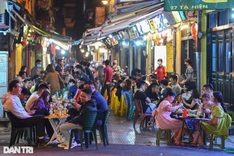
Hanoi has approved a plan to expand its night-time economy, targeting the sector to contribute about 5 per cent of the capital's gross regional domestic product (GRDP) by 2030.
Illegal hunting of swiftlets in Khanh Hoa province is threatening the country's bird's nest industry, officials warned on Tuesday, citing risks to biodiversity and long-term growth.
Business confidence among European companies in Vietnam rose to 79.7 in the second quarter from 72.7 in the previous quarter, reflecting improving business conditions, EuroCham said on Wednesday.
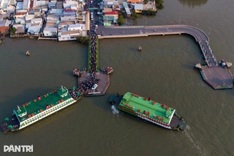
Dong Nai City and HCM City plan to build eight new bridges to improve regional transport links as authorities seek to ease congestion and strengthen connectivity between the neighbouring cities.
Vietnam's Ministry of Construction has dropped a proposal to introduce fixed-term ownership of apartment units from a draft revision to the Housing Law, following public debate over the measure.
Vietnam has revised its national road network plan, expanding the expressway system to 46 routes with a total length of about 10,105 km by 2050, the Ministry of Construction said.
Danang City has begun construction of a 684-unit social housing project as the central city steps up efforts to meet a government target of delivering nearly 29,000 affordable homes by 2030.
Hanoi has dismantled 216 of 231 informal street markets and unlicensed trading areas under a citywide campaign to improve urban order and traffic safety, according to the municipal People's Committee.
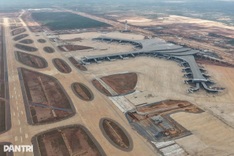
Long Thanh International Airport is set to begin commercial operations on December 1, initially serving selected domestic and international air routes.
Hanoi recorded Vietnam's highest average monthly per capita income in 2025, at VND 8.374 million (USD 320), according to the General Statistics Office (GSO).