An amendment to the Land Law would require investors to have a clean slate before being granted land for new projects.
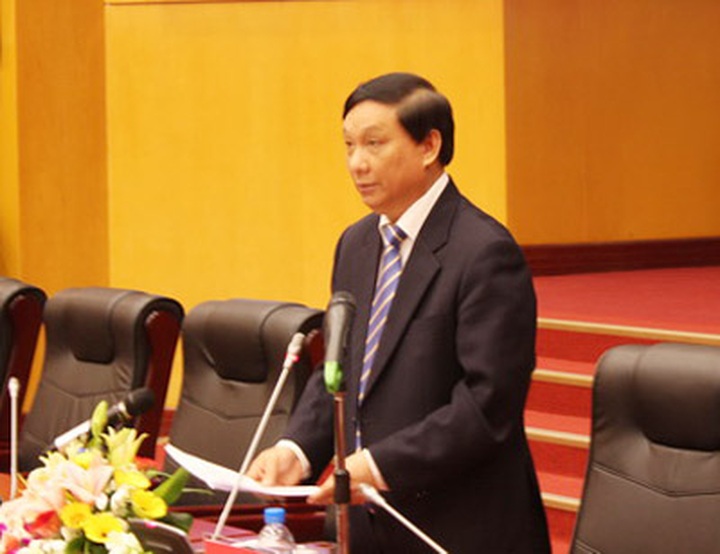
Nguyen Manh Hien said government will continue setting land prices
Nguyen Manh Hien, Deputy Minister of Natural Resources and Environment, said at a recent press conference on the issue that, in order to get land a new project, apart from current requirements, the amended law requires investors to prove their financial capacity through audited reports. They may also be required to put down a certain amount of money as security as well.
“One important condition to land grants for new projects is that the investor must have strictly complied with regulations on all previous projects. If the investor has stagnant projects they may not be granted land," Hien said.
Concerning the use of rice cultivation and forest land, he said, relevant authorities must make a report to the prime minister prior for licensing such projects. In turn, the investor must have plans to help the government reclaim land in other places.
“The regulation is expected to encourage investors to be more cautious about what projects to go forward with," he commented.
Regarding pending projects, the draft law stipulates that no land will be granted to a project that lacks detailed plans for its implementation, and any project that remained pending for three years would be cancelled.
Land withdrawal will be applied to investment projects in two cases: projects that have received land but have yet to begin implementation after one year; projects that are still stagnant after two years. Investors will have only one extension on land leases for a maximum of a one-year period. The current law does not address in detail the times of extensions.
For cases in which investors do not voluntarily return land belonging to stagnant projects, the government will revoke the land without any compensation.
He rejected the idea of a proposal to auction land in all cases, saying that the government would continue to set land prices.
“It does not make sense to have areas where land values are extremely high while incomes remain low," he said.