
Many Vietnamese enterprises have faced difficulties from the beginning of the year as a result of the world economic downturn and tightened consumer spending.
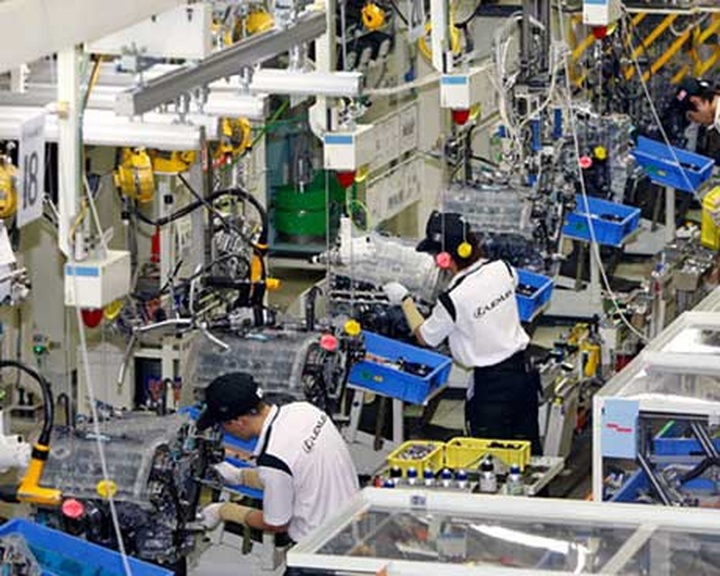 |
| Enterprises have faced difficulties from the beginning of the year (illustrative photo) |
People usually buy new things for Tet, but this year they are tending to tighten their spending even on essentials.
The industrial production growth rate in January 2012 declined 12.9% compare to the end of 2011 and 2.4% compared to the early 2011.
Cars and motorbikes are usually top consumer goods purchased prior to Tet, have taken a fall this year. A representative of Vietnam Automobile Manufacturers' Association said that car sales in January had dropped 50% compared to the previous month. This is the result from the rise in registration fees and vehicle plate registration fee in Hanoi and Ho Chi Minh City.
The electronics and electrical appliances industry also saw a slowdown. Even big discounts such as 34.8% and 76.8% on fridges and air-conditioners respectively have failed to attracted customers.
Similarly, the textile industry has suffered from the EU’s fiscal policies, due to a decline in Japanese consumer spending and a rise in input material prices. Only 10% of major textile factories have contracts to the third and fourth quarter of 2012.
The paper industry also met difficulties in competing with imported stock, causing production output to fall by more than 14% despite students beginning their second academic term.
According to Ministry of Industry and Trade, export turn-over in the first month only reached USD6.5 billion, an 11% fall in comparison to the same period last year. The export of 100 % capital domestic invested goods fell 33% while capital foreign invested goods increased nearly 8%, doubled compared to last year. Most of the foreign invested exports are mobile phones and electronic spare parts.
To deal with the difficulties, Deputy Minister of Industry and Trade Nguyen Nam Hai directed enterprises and relevant units to wisely exploit production capacity and domestic market demand. He aims to boost production and consumption.
Authorities have also been requested to observe changes in the world economy to make suitable adjustments and provide support for companies. Authorities will also limit the import of non-essential, luxury items to curb import surpluses and stabilise the macro-economy.


