
Daklak authorities announced the city's master plan to 2050 on October 30. The planning area covers 37,738 hectares, including Buon Ma Thuot, Tan An, Tan Lap, Ea Kao and Thanh Nhat wards, and Hoa Phu Commune.
The plan aims to develop Buon Ma Thuot into an ecological, smart and modern city with a strong cultural identity, serving as a sub-regional centre and an important hub for economic and social exchanges between the Central Highlands, the rest of Vietnam and international markets.
The city's population is projected to reach 550,000-658,000 by 2035 and rise to between 750,000 and 1.025 million by 2050.
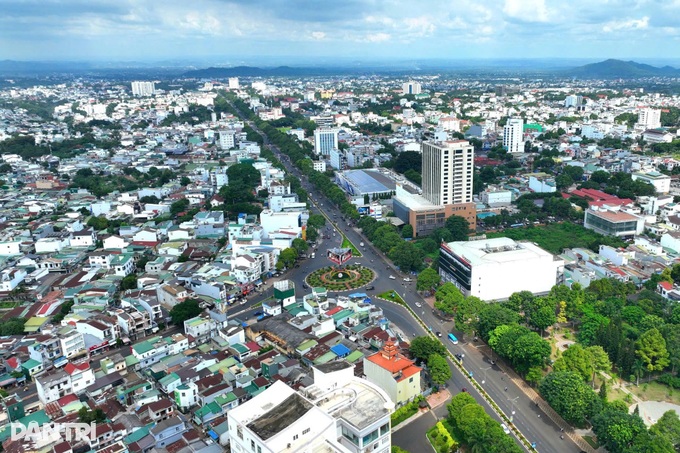
Buon Ma Thuot is planned under a multi-polar, multi-centre model (Photo: Thuy Diem).
Buon Ma Thuot will seek to strengthen its position as the "global coffee capital", while developing its economy around digital government, the digital economy and digital society, alongside food processing, high-tech agriculture and tourism.
The urban area will follow a multi-polar, multi-centre model comprising six functional zones. Buon Ma Thuot Ward will serve as the administrative, commercial, service, cultural and tourism centre. Tan An Ward will focus on high-quality ecological urban development, while Tan Lap Ward will be linked to public transport and logistics.
Thanh Nhat Ward will develop as a low-density urban area integrated with high-tech agriculture. Hoa Phu Commune will focus on clean industry, deep processing of agricultural products, logistics and ecotourism.
Ea Kao Ward will become a southern growth pole specialising in ecotourism, resort development and high-tech agriculture.
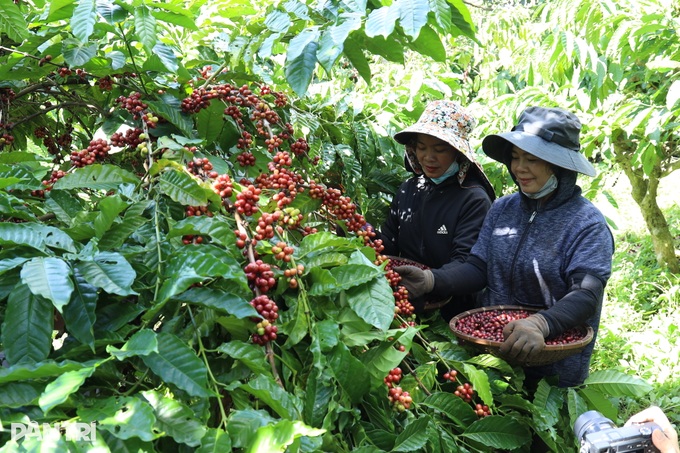
The master plan envisages Buon Ma Thuot continuing to affirm its status as a "global coffee capital" (Photo: Thuy Diem).
Daklak Province plans to invest in an integrated inter-regional transport network, including expressways, upgrades to Buon Ma Thuot Airport to meet 4C classification standards, completion of ring roads and the development of public transport.
Urban architecture and landscape planning will prioritise the preservation and restoration of traditional villages, valuable architectural works and long-established community spaces.
Alongside efforts to preserve its cultural identity, Buon Ma Thuot aims to expand industrial development, improve education and healthcare, increase green spaces, protect water resources and promote a circular economy.
Luong Nguyen Minh Triet, secretary of the Daklak Party Committee, said Buon Ma Thuot needed to strengthen its role as the central city and a key growth pole of the Central Highlands within the province's expanded development space stretching from the highlands to the coast.
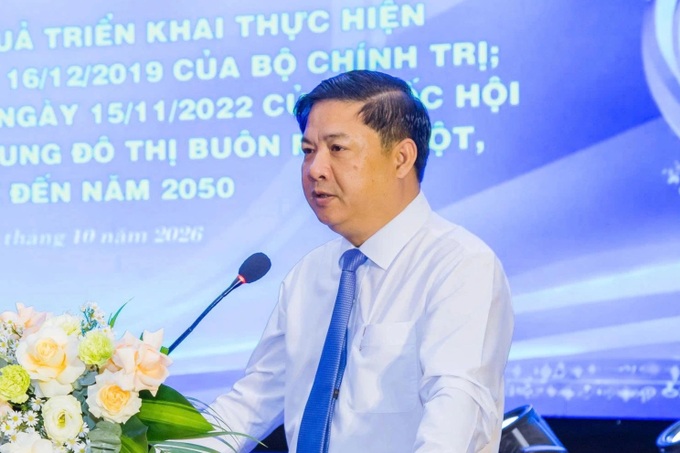
Luong Nguyen Minh Triet, Secretary of the Daklak Provincial Party Committee and head of the province's National Assembly delegation (Photo: Thuy Diem).
He said the city should connect raw material production areas with processing industries, logistics networks and markets.
Triet also stressed the need to prioritise the preservation of traditional villages, ethnic cultures and green ecosystems to maintain the city's distinctive identity. He called for existing policy mechanisms to be promoted and new measures developed to support Buon Ma Thuot's growth.