
After years of working, Viet Hoang, an office worker in Ho Chi Minh City, is struggling to find an apartment priced at around VND 2 billion (about USD 77,000) where he can settle down. With that budget, however, he can barely find a suitable flat, even on the outskirts, where prices hover around VND 55 million per square metre, putting a typical apartment above VND 3 billion.
“New apartments near the centre of Ho Chi Minh City are no longer affordable, often costing VND 5-7 billion each. Even on the outskirts, prices are around VND 3 billion. Borrowing more would put enormous pressure on my finances, so I have decided not to buy,” Hoang said.
“Even with VND 2 billion, I cannot afford an apartment in the outer areas, despite being willing to live farther away. I hope more reasonably priced homes will become available,” he added.
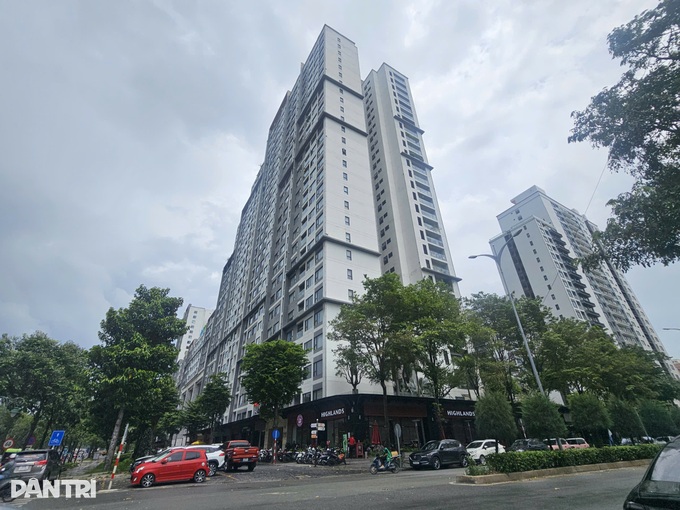
An apartment complex in Ho Chi Minh City (Photo: Le Tinh).
According to property consultancy Avison Young’s third-quarter market report, scarce land and high input costs continue to drive up prices in the former Ho Chi Minh City area, further shrinking the supply of affordable housing. The former provinces of Binh Duong and Ba Ria-Vung Tau are expected to help meet demand from urban workers. More than 25,000 new apartments are projected to enter the market between 2027 and 2030, ahead of expected infrastructure improvements by 2030.
Around 11,500 apartments were offered for sale in the third quarter, concentrated in southern, north-western and north-eastern parts of Ho Chi Minh City. Despite cautious buyer sentiment, transactions continued, with more affordable properties in Di An and Thuan An attracting strong demand from people seeking homes to live in. By contrast, luxury and high-end apartments in central areas sold more slowly. The overall absorption rate fell to 28 per cent.
One luxury apartment project in the western part of the city set a record, with prices of USD 4,500-4,800 per square metre. The wide gap in primary-market prices across different areas reflects differences in infrastructure prospects and developers’ brand strength.
A shortage of affordable apartments is also evident in Hanoi. Growth in primary-market prices slowed markedly, rising by just 1.5-2.3 per cent between July and September. More than 3,200 new apartments were launched in the third quarter, bringing total available supply to around 11,500 units. About 80 per cent were in the high-end and luxury segments, while mid-range and affordable homes were almost absent.
Primary-market prices in Hanoi reached a new high of around USD 4,180 per square metre, while the absorption rate fell to 31 per cent. High financing costs and rising borrowing rates have also put pressure on the secondary market, prompting price reductions of 5-12 per cent for some properties.
Against this backdrop, buyers with cash are increasingly turning to projects completed five to 10 years ago, where apartments cost around USD 2,000-2,500 per square metre, rather than buying on the outskirts at prices approaching USD 3,300 per square metre.
David Jackson, managing director of Avison Young Vietnam and Cambodia, said Hanoi and Ho Chi Minh City had remained attractive investment destinations during the first nine months of the year, supporting the country’s two largest property markets.
However, amid macroeconomic volatility, he said investment performance should be assessed not only by the volume of capital attracted but also by how quickly projects are implemented and how well they meet actual housing demand.
“Removing bottlenecks involving legal procedures, land and planning is essential to turning investment flows into suitable housing supply, particularly in market segments where shortages remain,” Jackson said.
High financing costs push up housing prices
Le Huu Nghia, general director of Le Thanh Trading and Construction Co, said the main reason apartment prices remained high was the cost of capital and bank borrowing rates, which currently stand at around 15 per cent a year.
These rates affect both homebuyers and developers. Prospective buyers are reluctant to borrow, weakening market liquidity, while developers face higher financing costs that drive up project expenses. As input costs continue to rise, developers find it difficult to cut prices without undermining financial viability.
Lengthy project timelines add to the burden. Developers must cover loan interest, management expenses, land-holding costs and opportunity costs over several years. These expenses are ultimately factored into selling prices when projects launch, creating a cost floor that makes substantial price reductions difficult.
Nghia said sustainable reductions in housing prices would require lower interest rates, faster approval procedures and more efficient project development.
Vo Huynh Tuan Kiet, director of the residential division at CBRE Vietnam, forecast a clearer divergence between primary and secondary apartment markets over the next six to 12 months.
In the primary market, he said a broad-based 5-10 per cent cut in advertised prices was unlikely. Listed prices would probably remain largely unchanged because direct reductions could affect the value of developers’ collateral held by banks and undermine confidence among customers who had already purchased apartments.
Instead, the effective prices paid by buyers could fall through promotional incentives. Kiet said discounts for early payment could reach 8-15 per cent for customers using their own funds and paying quickly.
Developers could also offer extended payment schedules, equivalent to about 1-1.5 per cent of the price per month over periods of at least three years, as well as longer interest-rate support and principal repayment holidays. Such arrangements could extend from 18-24 months to 36 months.
Some projects may offer additional incentives, including gifts, three to five years of free management fees or rental guarantees yielding 6-8 per cent a year. When all incentives are converted into their present cash-flow value, the effective transaction price could be 7-12 per cent below the original listed price.
“In the secondary market, prices are expected to adjust more noticeably. For projects with weak liquidity or limited scope for further growth, discounts of 5-8 per cent in quickly negotiated transactions are possible, creating bargaining opportunities for buyers with cash available,” Kiet said.