
Vietnam recorded 1.6 million young people aged 15-24 who were not in employment, education or training (NEET) in the third quarter of 2026, an increase of more than 195,000 from the previous quarter, the Statistics Office said.
The group accounted for more than 11 per cent of the country's youth population. The rise was partly attributed to the timing of graduation, as many university, college and vocational school students completed their studies and began transitioning into the labour market.
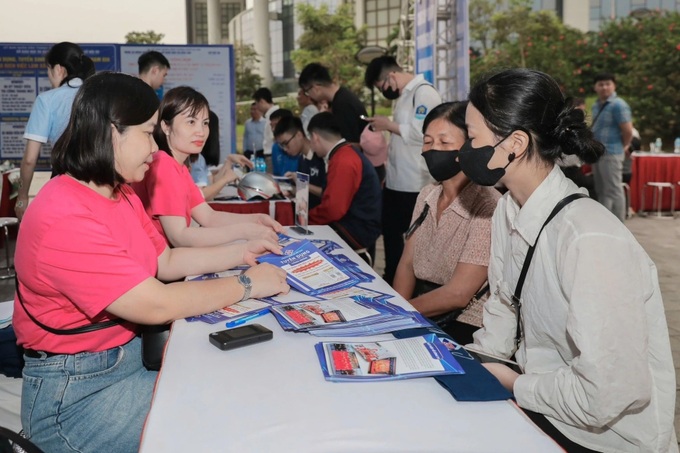
The labour underutilisation rate declined (Illustrative photo: Thanh Binh).
Citing International Labour Organization data, the Statistics Office said the global NEET rate among young people stood at 20 per cent in 2025, compared with more than 16 per cent across ASEAN countries and over 24 per cent in India.
Vietnam's rate of about 11 per cent remains relatively low compared with many countries. However, it could fall further if career guidance, education pathways and support connecting young people with employers become more effective.
Statistics released in April showed that nearly 70 per cent of Vietnam's NEET population lived in rural areas and more than half were women. About 87 per cent had received no technical or vocational training, and more than half of that group had not completed upper secondary school. Only 13 per cent had received training at elementary vocational level or above, while about 32 per cent wanted to find work.
The third quarter also saw about 1.9 million workers, equivalent to 3.6 per cent of the labour force, whose employment needs were not fully met.
This group includes unemployed people, those working fewer hours than they would like, and people outside the labour force who are available for work but are not seeking a job, or who are looking for work but cannot start immediately.
The figures point to a mismatch between labour supply and demand, reflecting an excess supply of workers in parts of the market. Some degree of underutilised labour exists even in a normally developing economy, but the rate tends to rise sharply during socio-economic shocks.
The rate peaked at more than 10 per cent in the third quarter of 2021 during the Covid-19 pandemic, before declining gradually and stabilising at around 4 per cent.
Overall, Vietnam's labour market continued to show signs of stability in the third quarter. Employment and average monthly incomes rose compared with both the previous quarter and the same period in 2025, while informal employment and underemployment declined.
The unemployment rate among working-age people remained broadly stable at just over 2.2 per cent.
For the first nine months of 2026, Vietnam's labour force aged 15 and above reached 53.8 million, an increase of 697,000 from the same period last year.