
Vietnam's Ministry of Industry and Trade and Ministry of Finance have announced a reduction in retail fuel prices, effective from 3 pm on August 27.
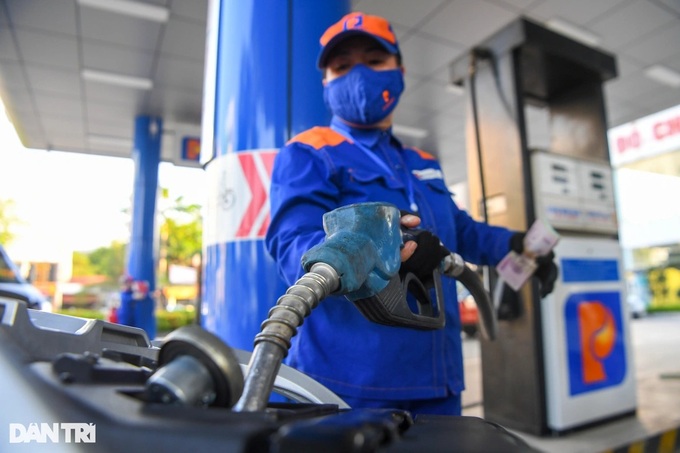
Under the latest adjustment, the price of E5 RON 92 petrol has been cut by VND 70 per litre, while E10 RON 95 petrol has fallen by VND 60 per litre. Retail prices now stand at VND 21,760 (USD 0.83) per litre for E5 RON 92 and VND 22,600 (USD 0.86) per litre for E10 RON 95.
Diesel prices have been reduced by VND 460 per litre to VND 28,080 (USD 1.07) per litre, while mazut has risen by VND 460 per kilogramme to VND 18,140 (USD 0.69) per kilogramme. Regulators said no contributions would be made to, or withdrawals taken from, the fuel price stabilisation fund during this pricing period.
The latest adjustment marks a return to lower fuel prices after a brief increase in the previous review cycle. Domestic fuel prices in Vietnam remain below those seen in several other countries across the region.
In the global oil market, Reuters reported that crude prices fell by more than USD 1 a barrel on August 27, extending recent losses as investors grew increasingly optimistic that negotiations involving Iran could lead to the reopening of the Strait of Hormuz and reduce the risk of supply disruptions in the Middle East.
Brent crude fell by USD 1.07, or 1.2 per cent, to USD 86.77 a barrel, putting the benchmark on course for a fourth consecutive daily decline. US West Texas Intermediate crude dropped by USD 1.13, or 1.4 per cent, to USD 81.10 a barrel, heading for a fifth straight session of losses.
According to a senior Iranian official, Iran and Oman are finalising details of an agreement concerning control of the Strait of Hormuz. Meanwhile, Qatar's prime minister is expected to travel to Iran in an effort to revive diplomatic talks aimed at ending a conflict that has continued for nearly six months.
The Strait of Hormuz is one of the world's most important shipping routes for crude oil and liquefied natural gas. Before the outbreak of the Middle East conflict on February 28, the volume of oil and LNG passing through the waterway accounted for roughly one-fifth of global consumption. Flows through the strait declined sharply after Iran moved to restrict activity along the route.
Despite expectations that a reopening of the strait could ease pressure on oil prices, analysts said supply risks remain significant. Iran and other parties have yet to agree on conditions for ending hostilities, while Tehran continues to use its control of the waterway as a source of leverage.
Beyond crude oil, conflicts in the Middle East and between Russia and Ukraine have also affected global diesel supplies. US inventories of distillate fuels, including diesel and heating oil, fell by 2.2 million barrels in the week ending August 21 to 103.4 million barrels, the lowest level ever recorded for this time of year.