
Viet Duc University Hospital announced on July 29 that it had successfully performed Vietnam's first penis transplant, using tissue from a brain-dead donor. Only five such operations have previously been reported worldwide.
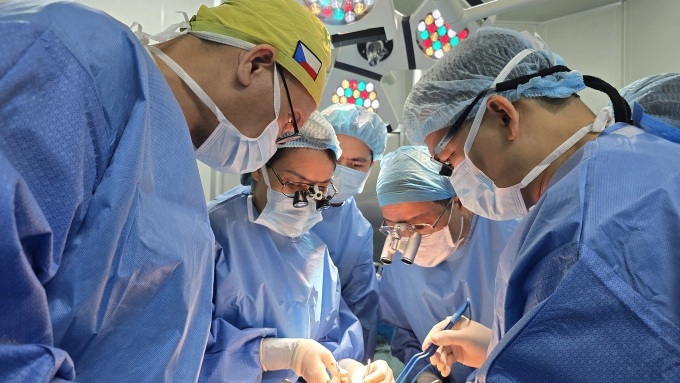
Speaking to reporters, hospital director Duong Duc Hung said the 43-year-old patient was recovering well seven days after surgery.
Doctors said the transplanted organ was receiving a healthy blood supply and showing positive signs of recovery. The medical team will continue monitoring the patient to assess the restoration of function in the coming months.
The patient had lived without a penis for four years after undergoing surgery to treat a medical condition. During that period, he received care at the hospital's Andrology Centre but experienced severe psychological distress and social isolation.
Hung said the patient withdrew from social life and avoided going out because he was unable to carry out even basic bodily functions, including urinating normally.
According to the hospital, penis transplantation is among the most technically demanding forms of reconstructive surgery. The most recent reported case worldwide was performed in the United States in 2018.
Hung said there was significant demand for the procedure in Vietnam, where patients may lose the organ because of workplace or household accidents, animal attacks or surgery to treat disease. However, many are reluctant to seek treatment because of the sensitive nature of the condition.
Before approving the operation, doctors carried out comprehensive medical assessments, including blood tests, biochemical analysis, cardiac and lung function examinations, and diagnostic imaging.
Following a multidisciplinary review covering surgical suitability, immunology, psychological health and ethical considerations, the patient was deemed eligible for transplantation.
The hospital said the decision was made after careful evaluation, with the aim of restoring both physical function and quality of life.
Nguyen Hong Ha, head of the hospital's Department of Maxillofacial, Plastic and Aesthetic Surgery, said the institution had nearly 20 years of experience in microsurgical reattachment of traumatically amputated penises, helping many patients regain almost complete function.
The hospital also routinely performs reconstructive procedures for patients with burns, congenital abnormalities, absent genitalia and those undergoing gender-affirming reconstruction. Ha said this experience in microsurgery and reconstructive surgery provided the foundation for developing the transplant technique.
Hung described the operation as a milestone for Vietnam's reconstructive and transplant surgery, saying it could expand treatment options for patients who have lost a penis because of cancer, trauma or accidents.
He added that Viet Duc University Hospital is also preparing to introduce uterus transplantation in the future.