
On June 23, the Management Board of the Nam Quang Tri Special-use Forest said its forest protection team had identified the entrance to a large cave concealed within pristine forest in the Bac Huong Hoa Nature Reserve.
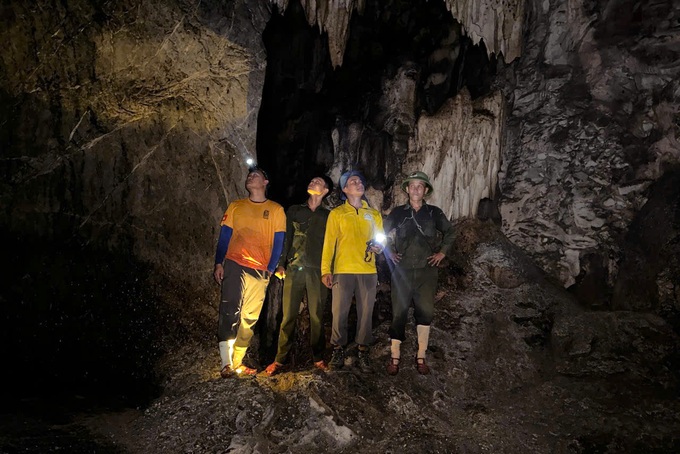
Authorities in Quang Tri Province discovered the cave during a forest patrol and protection operation (Photo: Nam Quang Tri Special-use Forest Management Board).
According to an initial survey, the cave chamber is estimated to be nearly 70 metres wide. After travelling around 200 metres inside, the survey team found that the cave splits into four major branches extending deep into the mountain.
The cave contains numerous stalactite and stalagmite formations of varying shapes and colours.
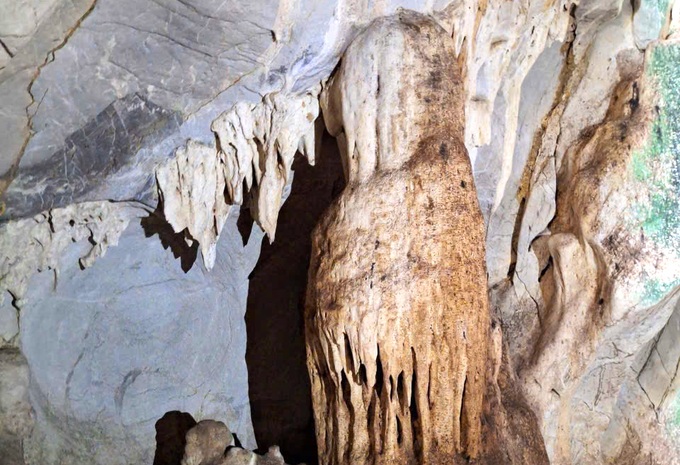
The newly discovered cave contains many stalactite formations of varied shapes and colours (Photo: Nam Quang Tri Special-use Forest Management Board).
Based on the geological structure, surveyors believe the cave may contain even more spectacular formations further inside and could also be connected to an underground water system.
However, due to limited protective equipment and technical resources, the team was unable to venture deeper into the cave to explore its full extent.
A large sinkhole was also discovered near the newly identified cave. The site is located close to Van Tien Cave, which was first discovered more than a decade ago.
The proximity of the two sites has led researchers to speculate that they may form part of a vast and interconnected cave system beneath the area.
The Management Board of the Nam Quang Tri Special-use Forest said it is working with cave experts and specialised organisations to organise a comprehensive expedition equipped with appropriate gear to further investigate the newly discovered cave.
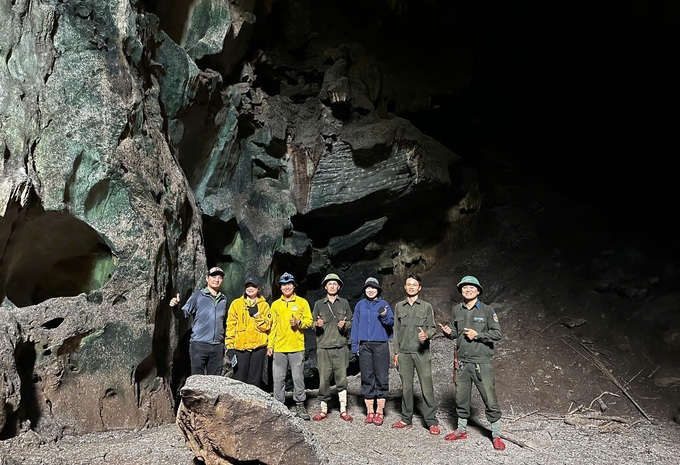
Authorities will continue surveying the newly discovered cave in Quang Tri Province (Photo: Nam Quang Tri Special-use Forest Management Board).
Earlier this year, between late March and early April, a British-Vietnamese cave exploration team, working with local authorities and residents, surveyed a number of caves in and around Phong Nha-Ke Bang National Park.
The expedition surveyed 29 caves, including 26 newly discovered sites, and extended exploration of three previously known caves. The team mapped a combined length of 13,643 metres and documented several large cave systems with significant scientific value.