
The sound of a traditional Vietnamese rice-puffing machine echoed through the area, evoking memories of rural Vietnam where the snack was once a common childhood treat.
Phuong Linh, a Vietnamese resident in Sagamihara, said she learned about the event through a local Vietnamese community group and decided to bring her Japanese husband and young son along.
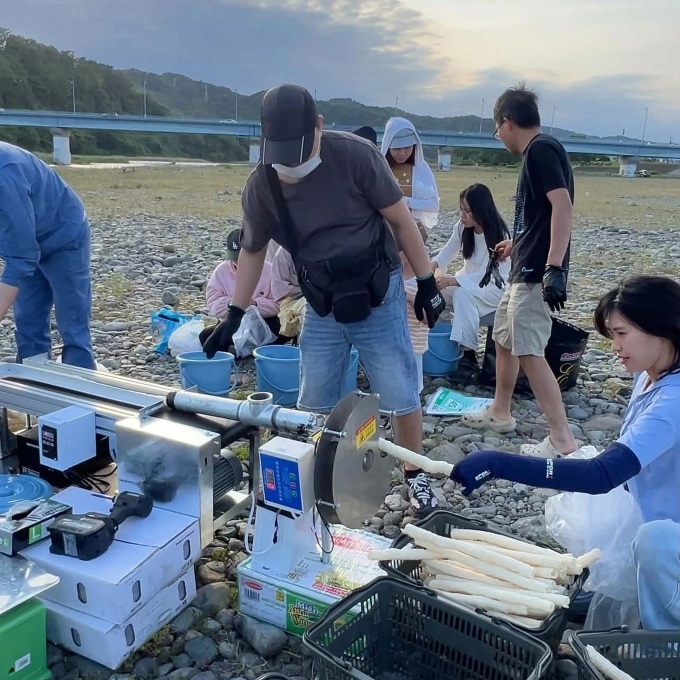
“When we arrived around 4 pm, more than 40 people were already waiting in line,” Linh said, adding that visitors ranged from young children to pregnant women.
Because traditional puffed rice machines are rarely seen in the area, many Vietnamese residents brought large amounts of rice, with some carrying as much as 10 kilogrammes to make snacks to take home.

The puffing service costs about JPY 550 (USD 3.5) per kilogramme of rice, and some families reportedly waited several hours for their turn. Linh said her family brought only about 2 kilogrammes of rice but still waited from 4 pm until nearly 7 pm.
The machine belongs to a young Vietnamese worker in Japan who assembled it himself after researching how to recreate the traditional snack-making process abroad.
He regularly transports the machine to different locations serving Vietnamese communities and announces the events through social media groups, while also preparing ingredients such as rice, beans and peanuts for customers.
Linh noted that her Japanese husband, Hiroki, was fascinated by both the machine and the excitement surrounding the snack.

It was his first time seeing a traditional Vietnamese puffed rice machine, and he closely watched how it operated while wondering how such a large machine could be moved between locations.
After tasting the puffed rice, Hiroki was surprised by its simple but appealing flavour, while the couple’s young son quickly ate two large tubes of the snack.
For many Vietnamese living abroad, the snack carried emotional value beyond its taste.
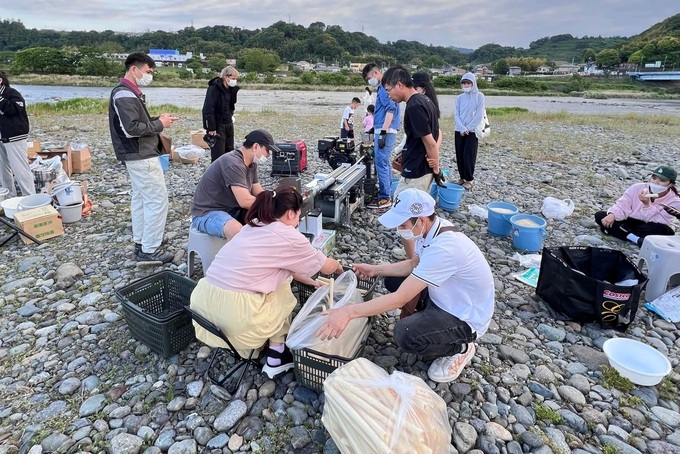
“I really miss this snack. It’s simple but delicious. Living far from home, eating it again brings back childhood memories, and many parents want their children to experience foods tied to Vietnamese childhood and culture,” Linh said.
Because the machine is noisy, organisers set it up away from residential areas near the riverside. Most visitors were Vietnamese, and conversations in Vietnamese filled the area as children ran around eating puffed rice snacks.
“People didn’t know each other, but everyone chatted naturally like neighbours back home. For a moment, it felt like we were back in Vietnam,” Linh added.