
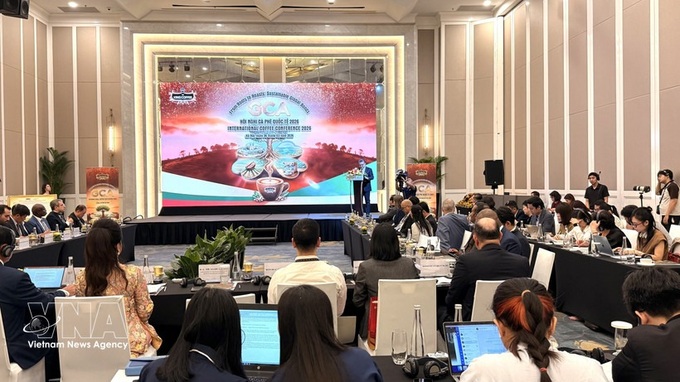
The Global Coffee Alliance was unveiled at the International Coffee Conference 2026, hosted by TNI King Coffee, with representatives from 19 diplomatic missions in attendance.
Le Hoang Diep Thao, founder and chief executive of TNI King Coffee, called for stronger cooperation between coffee-producing and consuming nations as the industry faces mounting pressures from climate change, market volatility and stricter supply chain requirements.
She said the alliance would enhance collaboration, enable resource sharing and support sustainable growth amid deeper global integration.
The platform aims to connect around 125 million people involved in the global coffee value chain, with a focus on protecting ecosystems, improving livelihoods and ensuring no farmer is left behind. It also encourages producing countries, including Vietnam, to move beyond raw exports by strengthening processing capacity, increasing added value and building national brands.
The alliance is envisioned as a public–private partnership linking diplomatic engagement with business operations. Looking ahead to 2040, it aims to develop an inclusive, technology-driven global coffee ecosystem aligned with net-zero emissions goals.
The Global Coffee Alliance Declaration 2026 outlines five priorities: protecting ecosystems and promoting regenerative agriculture; ensuring fair incomes for farmers; strengthening cooperation to build transparent supply chains; encouraging innovation and digital transformation; and promoting coffee culture as a shared global heritage.
As the world’s second-largest coffee exporter and leading producer of Robusta, Vietnam’s role in hosting the launch highlights its growing influence in global value chains and its commitment to shaping the sector’s future.
At the event, Saadi Salama said the conference had moved beyond a traditional trade forum, emphasising coffee’s role as both a commodity and a cultural bridge fostering dialogue and international cooperation.
Experts at a discussion session shared insights on market trends and sustainable development strategies. Luong Van Tu highlighted ongoing challenges for producing countries, while agronomist Pham S proposed solutions to address climate change and advance sustainable development towards 2050.
Participants also discussed the GCA Strategic Vision 2040, outlining a roadmap for a people- and nature-centred coffee ecosystem powered by technology, with net-zero emissions identified as a long-term guiding principle.