

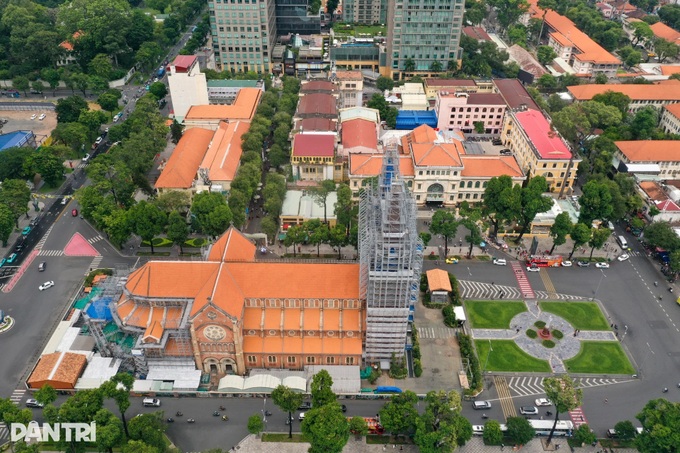
Long hidden behind scaffolding, the 140-year-old landmark in Ho Chi Minh City is re-emerging, with its red-brick façade restored to its original appearance.
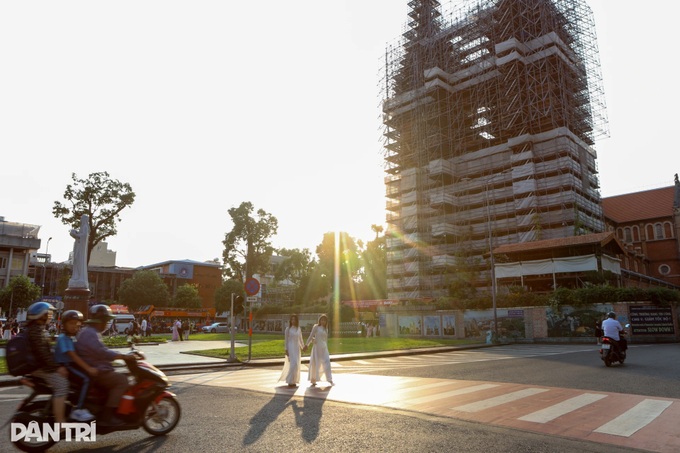
The restoration, led by Belgium’s Monument Group, began in July 2017 and is now entering a phase to complete key details while preserving the cathedral’s original form and durability.
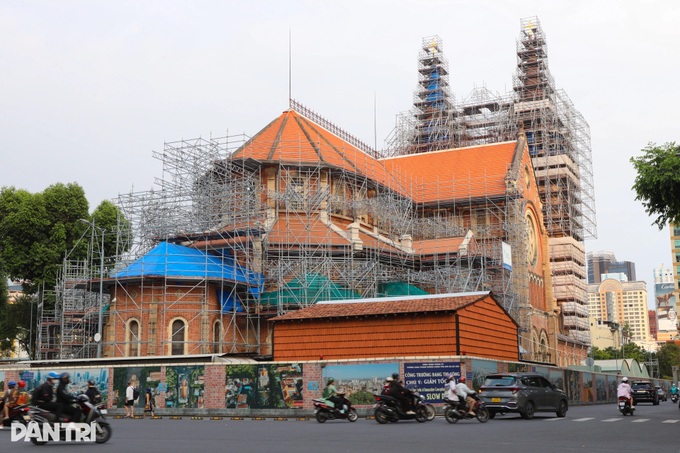
Construction of the cathedral started on October 7, 1877, and was completed on April 11, 1880, becoming one of Vietnam’s most prominent examples of French colonial architecture.
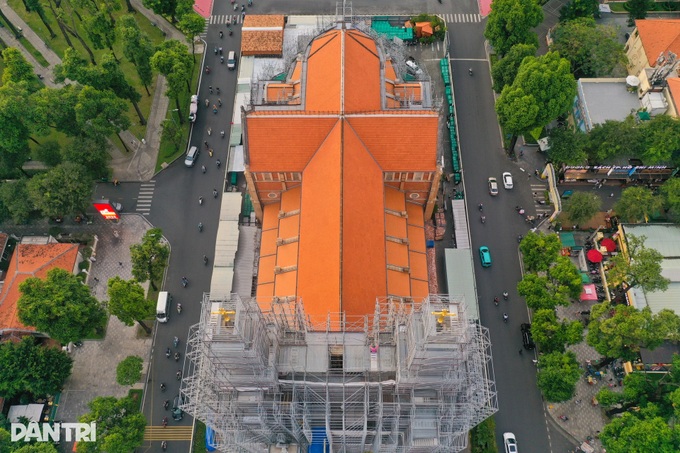
In 2024, workers focused on dismantling platforms, rebuilding the bell towers and reinforcing zinc-clad bases, complex tasks vital to the structure’s integrity.
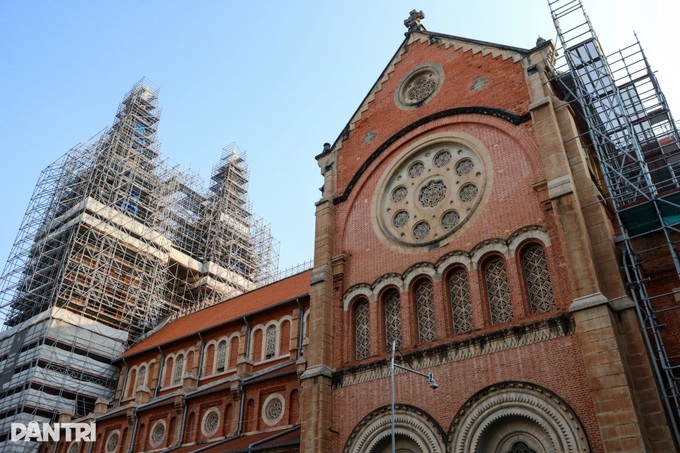
To ensure authenticity and longevity, all materials were sourced from Europe, with funding from the Archdiocese of Saigon and parishioners at home and abroad.
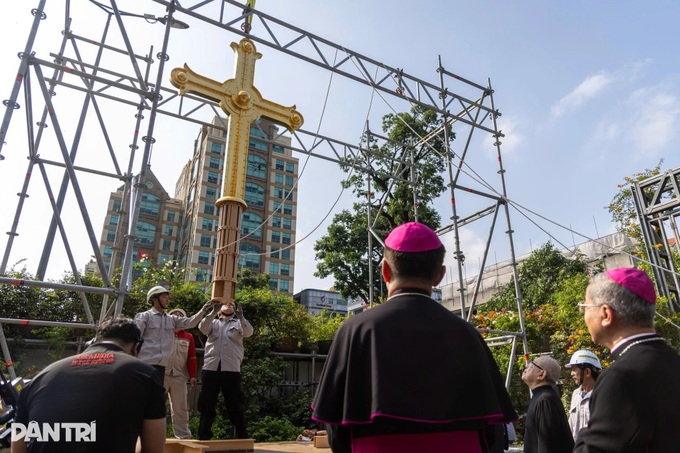
A milestone was reached on March 19, when two gold-plated crosses were installed atop the towers. Each, measuring 3.7 metres and about 400 kilogrammes, was crafted in Belgium over two years.
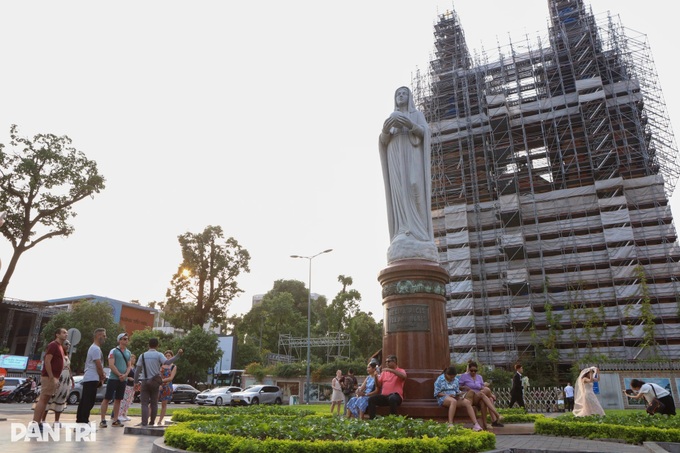
Throughout the restoration, visitors gathered outside the cathedral as engineers worked cautiously to ensure safety and preserve its heritage value.
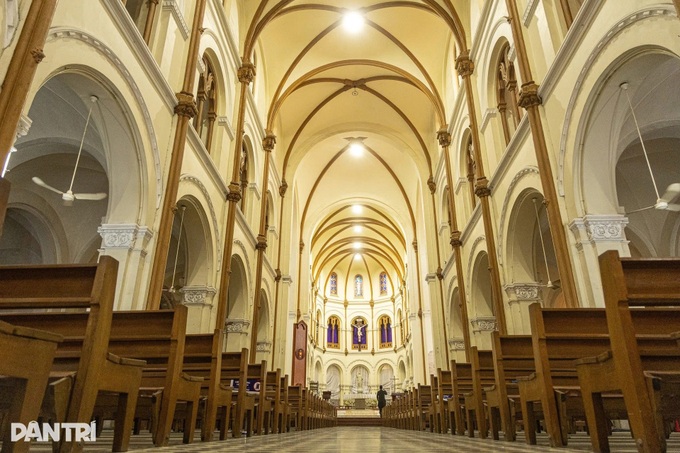
Inside, the cathedral remained softly lit, maintaining a solemn atmosphere for services during the restoration.
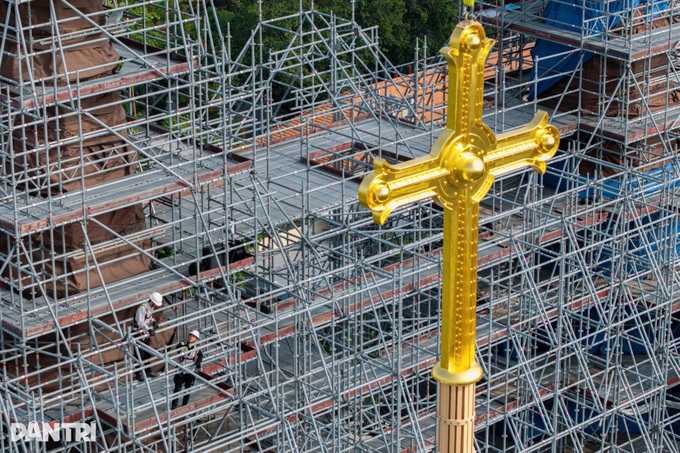
Engineers said the project required exceptionally high standards due to extensive deterioration, with each component studied and matched to original designs to ensure durability and integrity.
The cathedral’s historic bell system, weighing nearly 30 tonnes, was suspended during construction to avoid structural risks, with a temporary set of 25 bells installed in late 2022.
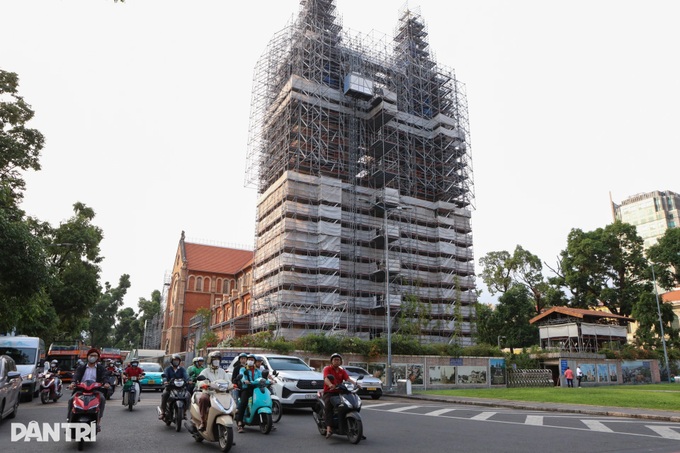
Originally due for completion by end-2027, the project is now expected to take longer due to severe damage and the need for carefully sourced materials, parish priest Ho Van Xuan said.
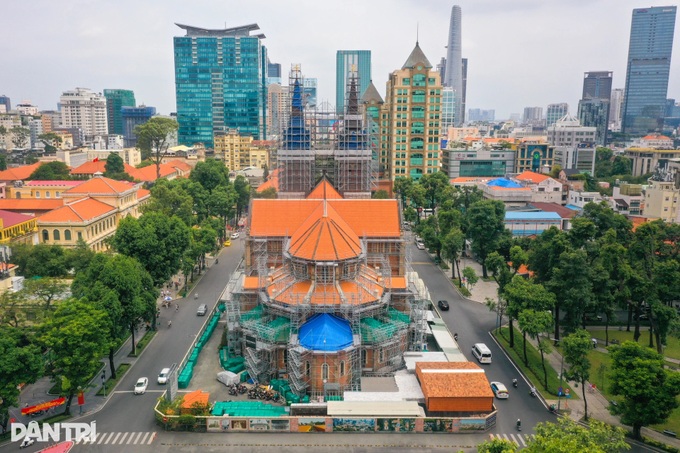
After nearly a decade of restoration, the cathedral is regaining its historic character and is expected to remain a key cultural and religious landmark in Ho Chi Minh City.