
Many Vietnamese travellers are booking long spiritual pilgrimages and retreats in the early days of the Lunar New Year, reflecting rising demand for culturally and spiritually focused journeys.

Many families choose spiritual tours at the beginning of the year (Photo: File).
According to travel firms, since the Covid-19 pandemic, more customers have sought tours centred on culture, history and Buddhist practice.
Nguyen Tran Hoang Phuong, representative of Golden Smile Travel, said pilgrimage tours are no longer built on conventional sightseeing models but are positioned as distinctive, experience driven journeys.
“This is not simply a trip, but a spiritual journey that requires careful preparation in terms of rituals, content and companions,” Phuong said.

Many middle-aged customers are interested in spiritual tours during Tet (Photo: Character's Facebook).
The customer base is becoming increasingly diverse. In addition to middle aged Buddhists and families travelling at the start of the Lunar New Year, a growing number of young people are joining to seek slower paced environments away from the noise of urban life.
Unlike traditional outbound tours to destinations such as South Korea, Japan or Europe, which focus on sightseeing, shopping and leisure, spiritual tours often last longer, include fewer stops and allow more time at each destination.
Programmes typically revolve around visiting sacred sites, studying Buddhist teachings, attending religious gatherings or experiencing retreat settings.
Tran Anh Tuan, representative of Diamondtour, which specialises in Buddhist cultural pilgrimages, said bookings after the Lunar New Year holiday have increased compared with the same period last year.
“In the past, most customers travelled to pray for peace or prosperity. Now they are more interested in accessing original values and learning about Buddhist history and philosophy,” Tuan said.
The most stable growth segment is long haul itineraries to India and Nepal. Pilgrimages to sacred sites associated with the life of the Buddha, including Bodh Gaya, Lumbini, Sarnath and Kushinagar, have been organised more actively since mid January in the lunar calendar, around early March.
Tour prices for India and Nepal currently range from VND 30 million (USD 1,176) to VND 40 million (USD 1,569), depending on timing and service standards. Tibet itineraries cost around VND 80 million (USD 3,137) to VND 90 million (USD 3,529). The Kora Kailash route, one of Asia’s most demanding spiritual journeys, can reach up to VND 120 million (USD 4,706) per person.
Despite higher prices than conventional sightseeing tours, travel companies report stable demand. According to Tuan, travellers view these journeys not merely as holidays but as investments in personal and spiritual growth.
“After Covid-19, budgets for spiritual tours have generally increased, although customers are more cautious. They are willing to pay if the programme delivers genuine value,” he said.
Organisers noted that operating tours in India and Nepal can be challenging due to underdeveloped infrastructure and differences in climate and culture. As a result, itineraries are carefully balanced between travel and rest, with particular attention to the health of middle aged and elderly participants.
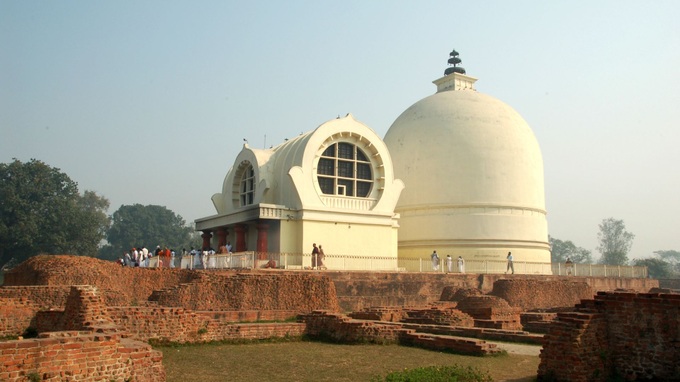
Lumbini – the birthplace of Buddha – is a popular spiritual destination in Nepal (Photo: T.L.).
Himalayas emerge as a distinctive experience
In recent years, the Himalayas have become a standout destination for travellers with stronger financial capacity and a desire for deeper experiences.
Nguyen Manh Duy, representative of OM Himalayas, Adventure, said journeys in the region are relatively costly. A one week trip in Nepal costs around VND 60 million (USD 2,353), while a two week itinerary in Tibet can reach VND 120 million (USD 4,706).
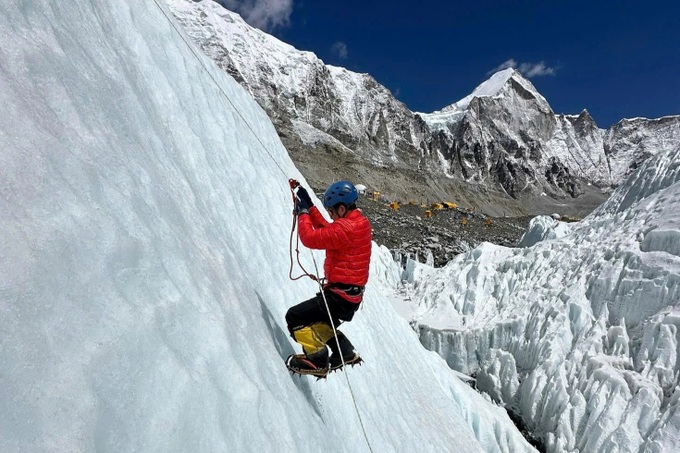
In recent years, the Himalayas have emerged as a special destination for financially well-off customers seeking profound experiences (Photo: Provided by character).
The Lunar New Year holiday in Vietnam coincides with harsh winter conditions across parts of the Himalayas, where temperatures can drop to minus 20 degrees Celsius. As a result, most departures begin after mid January in the lunar calendar, when the weather gradually becomes milder.
“This is not a journey for the masses. Most participants are financially well off travellers who have explored many destinations and are no longer interested in simple sightseeing or check in trips, but are seeking a more profound experience,” Duy said.