
In a statement issued on February 9, the airline group said the region will experience typical seasonal weather until February 28, including thick fog, light drizzle and reduced visibility, particularly in the early morning and late evening.
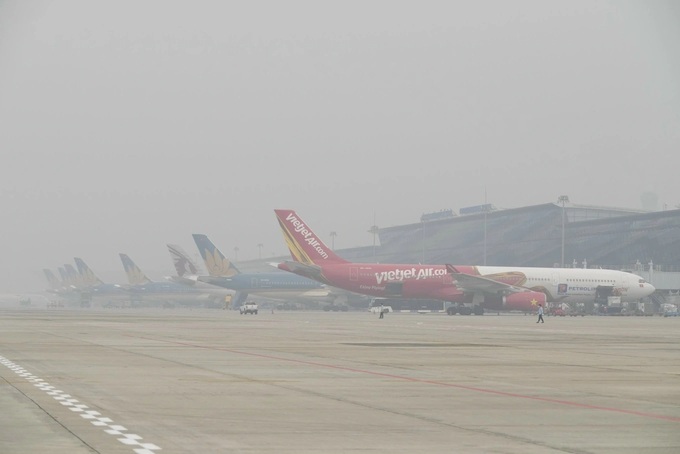
Airports frequently affected include Cat Bi in Haiphong, Tho Xuan in Thanh Hoa, Vinh in Nghe An, Dong Hoi in Quang Binh and Phu Bai in Hue, where low visibility has directly disrupted take-offs and landings.
When weather conditions fall below operational standards, flights may be delayed, held while waiting for improved visibility or diverted to alternate airports.
Vietnam Airlines Group noted that disruptions at fog-affected airports can trigger knock-on effects across the wider flight network, potentially altering schedules for multiple flights throughout the day.
Earlier, on January 27, dense fog and low cloud cover blanketed Noi Bai International Airport in Hanoi, forcing numerous flights to suspend take-offs and landings. Several flights were diverted or placed in holding patterns, and operations were temporarily halted at times to ensure safety.
The Northern Air Traffic Management Company said three aircraft were required to circle in the air, while four flights on the ground were unable to depart. Across long-haul airspace managed by the company, 17 flights were affected, with two diverted to Cam Ranh Airport.
Vietnam Airlines Group said it is closely monitoring weather developments and working with air traffic authorities to adjust operations flexibly and minimise disruption for passengers.
Airlines have advised travellers to regularly check flight status via official websites, mobile applications and hotlines before heading to the airport, and to arrive earlier than usual, especially for early morning and late night departures.
During this year’s Tet holiday period, Vietnam Airlines Group, including Vietnam Airlines, Pacific Airlines and Vasco, plans to operate more than 1,300 overnight flights from February 1 to March 3, offering nearly 300,000 seats to meet peak travel demand. Passengers are encouraged to complete online check-in within 24 hours of departure and use biometric technology where available to reduce waiting times at airports during the holiday rush.