
Hoang Duc Cuong, deputy director of the Department of Meteorology and Hydrology, made the assessment at the Ministry of Agriculture and Environment’s regular press conference on February 5, 2026.

Hoang Duc Cuong, Deputy Director of the Department of Meteorology and Hydrology, Ministry of Agriculture and Environment (Photo: Phung Minh).
He said forecasts show the Enso phenomenon is likely to remain neutral from May to July, with a 55 to 65 per cent probability. The chance of a shift to El Nino is rising to about 35 to 45 per cent, while a return to La Nina is considered unlikely.
From late summer to early autumn, Enso is expected to stay neutral but with a warm bias, potentially transitioning to El Nino in the final months of 2026 and early 2027. Under these conditions, Southeast Asia, including southern Vietnam, is likely to experience below average rainfall towards the end of the year.
From February to July, the number of typhoons and tropical depressions in the East Sea and affecting Vietnam is forecast to be close to the multi year average of 3.8 storms, with about 1.2 making landfall.
From August to December, storm activity in the East Sea and over the mainland is expected to be lower than the multi year average of 9.6 storms, with 3.8 making landfall. However, the agency warned that intense storms could still occur.
In August and September, storms are expected to mainly affect northern provinces, while from September to December they are likely to impact central and southern regions.
Heatwaves are forecast to appear in southern Vietnam from late February and early March, first in the southeast before spreading to the southwest. In the northwest, localised heatwaves may occur from March.
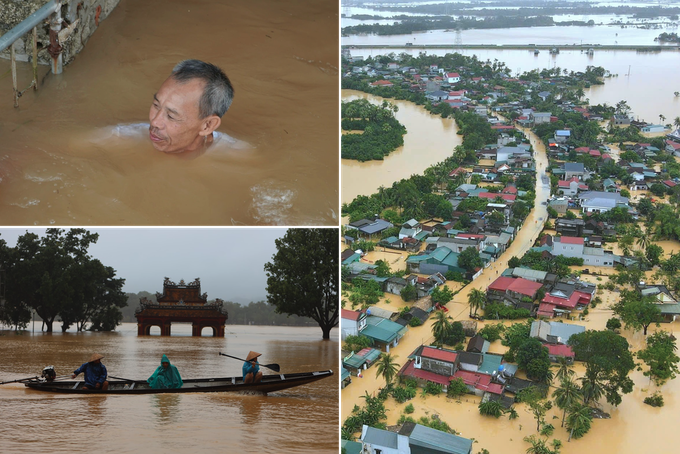
Central Vietnam experiences a harsh 2025, with successive typhoons, rain, and floods causing severe damage to people, property, and infrastructure in most provinces and cities (Photo: VPMT).
From April, areas from Thanh Hoa to Hue are likely to experience heatwaves, which are then expected to expand across northern and central regions from late April. In the south, heatwaves are forecast to ease gradually from May.
In northern and central regions, heatwaves are expected to intensify until August before gradually weakening from September. Overall, heatwaves are forecast to be more frequent than during the same period in 2025.
The department said cold air activity early this year is likely to be weaker than the multi year average but could still cause severe cold spells, particularly in northern mountainous areas in February. Light rain and drizzle in the north are expected mainly in the second half of February and March.
The rainy season nationwide is forecast to be broadly in line with the multi year average, beginning in late April or early May in the Central Highlands, in the second half of May in the south and in May in northern regions.
The number of widespread heavy rainfall events this year is expected to be similar to or lower than the long term average. Such events are likely to begin in June in the north, move southwards and end around November in central provinces.
During the dry season in early 2026, saltwater intrusion in the Mekong Delta is forecast to be around the multi year average and lower than in the 2024 to 2025 dry season. From February to April, intrusion may increase but is not expected to significantly disrupt daily life or agriculture.
The department also warned of localised drought and water shortages from April to July in areas outside irrigation systems in Gia Lai, Dak Lak and Lam Dong provinces.