
The organising committee unveiled the festival framework on December 10, simultaneously launching an expanded Hanoi Creative Space Network.
The events are coordinated by the municipal Department of Culture and Sports in partnership with Architecture Magazine, with support from UNESCO and Sovico Group.

The 2026 Hanoi Creative Design Festival will be held with many changes and more space for creative ideas. Photos courtesy of organisers
Scheduled to run from January to November, the festival will feature eight categories of activities, including exhibitions, fairs, forums, creative projects, design awards and the development of creative infrastructure. Five thematic creative spaces will be established across the city, covering heritage, craft and the Old Quarter, alongside ecological, community and future-oriented spaces linked to public parks and the Red River’s alluvial area.
Vice Chairwoman of the municipal People’s Committee Vu Thu Ha said the festival, under the theme 'Creative Economy,' aims to strengthen connections among businesses, craft villages, artisans, designers, universities and experts, helping to build a dynamic and sustainable creative ecosystem.
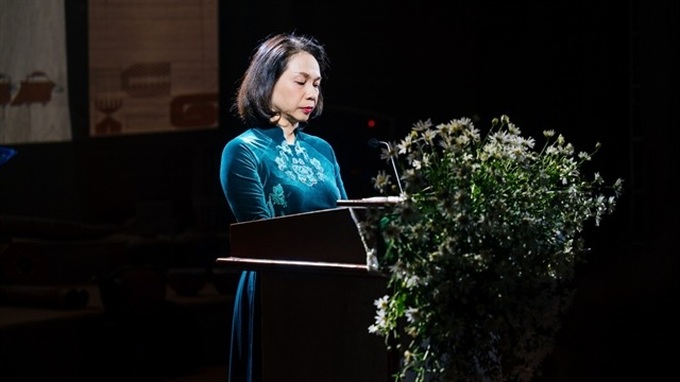
Vice Chairwoman of the municipal People’s Committee Vu Thu Ha speaks at the launching event on December 10 in Hanoi.
Projects, ideas and initiatives aimed at preserving and promoting cultural values, tangible and intangible heritage and traditional craft villages will evolve into creative ventures with commercial potential and sustainable growth. These efforts will help spread a spirit of innovation while enhancing the quality of life for communities.
She noted that creative activities will extend beyond design products to include urban planning, public space design, community initiatives and solutions to challenges such as pollution, flooding and traffic congestion, alongside ideas focused on improving quality of life with people at the centre.
In line with this new direction, the festival will transform from a traditional event into a platform for building an urban creative ecosystem. Using an interdisciplinary approach, it will bring together visual arts, design, technology, architecture, sound, data, crafts and performance. The aim is to create immersive, multi-sensory experiences, foster new art forms and develop interactive spaces with an international outlook.
The festival framework comprises eight groups of activities in the field of creativity: exhibitions, trade fairs, forums, competitions, creative projects, design awards, creative funds and creative infrastructure.
Interactive activities will take place across five areas: Heritage Space at Dong Xuan-Bac Qua Market and the Đong Xuan Cultural Industry Centre; Market Space in Hanoi's Old Quarters; Future Space across the city’s park network; Ecological Space in the Red River delta; and Community Space throughout the city.
In these spaces, creators and designers will integrate heritage with innovation, pilot models of commercial and cultural development zones and connect artisans, designers and small business owners, forming heritage-creativity-commerce experience routes.
Organisers will also revive 'City - Street - Craft' spaces and establish 'Creative Streets' aligned with cultural industries, offering experiential zones for exhibitions, performances and interactions that link craft street life with Hanoi's elite craft villages.
The festival will include areas dedicated to students and children, alongside spaces for public design, international pavilions, competitions, workshops, creative camps and community activities.
A pilot project on urban-ecological symbiosis will be launched as a testing ground for innovative ideas, emphasising landscape art, local materials and circular design. Research will also be conducted to develop a waterway experience route along the Red River.

People of all background are encouraged to take part in the biennial event which will run from January to November.
Across the city, people are encouraged to take part in creative activities held in every corner, with participation from embassies, international organisations, cultural centres, historical sites, universities, creative spaces, exhibitions, museums, theatres, restaurants and cafes.
At the announcement, UNESCO Chief Representative in Vietnam Jonathan Wallace Baker said developing a creative ecosystem would generate sustainable opportunities for artists, students, businesses and communities, and expressed UNESCO’s strong support for Hanoi's long-term creative vision.
Architect Hoang Thuc Hao, vice chairman of the Vietnam Association of Architects, highlighted the role of architects, designers and artists in shaping cultural spaces that nurture ideas and provide practical solutions for the city.
He said that with the city’s clear vision, the active involvement of the creative community and the pioneering spirit of the architectural sector, Hanoi would realise its potential as a 'Creative City.' It would become a hub for the creative industry, where heritage is honoured, people are inspired and the future is shaped day by day.
The festival will be held every two years. The 2026 edition will begin in January with the 'Creative Convergence' event at Dong Kinh Nghia Thuc Square and the Hoan Kiem Lake area, showcasing a unique interdisciplinary artistic connection. The main activities will take place in November.
Since its launch in 2021, the festival has become a platform connecting heritage, art and technology, contributing to the capital’s cultural identity and the growth of its creative economy.