
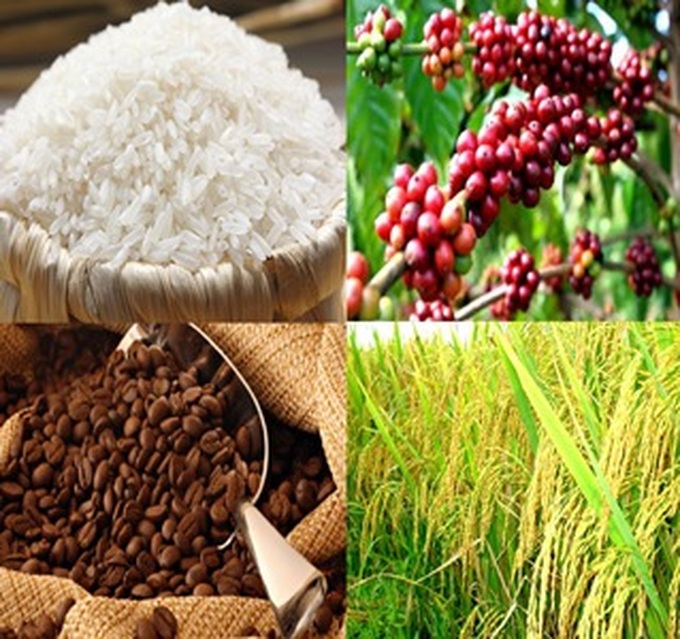
Vietnam’s rice and coffee export prices are low
The credit will finance the Sustainable Agriculture Transformation Project, which will directly benefit up to 200,000 rice-producing households, or some one million people, in the Mekong Delta, as well as 50,000 coffee-producing households, or about 250,000 people, in the Central Highlands.
“The project supports the government’s efforts to reform the agriculture sector, especially in the two important industries of rice and coffee,” said Chris Jackson, the World Bank’s Lead Rural Development Specialist and team leader for the project.
“Vietnam is now a major global exporter of rice and coffee. However, too much attention has been paid to increasing productivity, which has resulted in the extensive use of unsustainable practices and high-volume but low-value exports," Jackson said.
"Sustained agricultural growth will require structural changes in the pattern of production and the organization of the supply chain to benefit small-holder rice and coffee farmers, which is the main goal of this project,” he said.
The project will help rice farmers in the Mekong Delta provinces of Kien Giang, An Giang, Hua Giang, Tien Giang, Can Tho, Soc Trang, Dong Thap, and Long An adopt improved on-farm practices and improve basic production and processing infrastructure for growing high-quality rice by linking them to agribusinesses.
It will further support sustainable coffee production and rejuvenation in the five major Robusta coffee-producing provinces of Lam Dong, Dak Lak, Dak Nong, Gia Lai and Kon Tum provinces.
The credit is provided by the International Development Association (IDA), which is the World Bank Group’s fund for the poorest countries.