
Many local beverage and confectionery companies are losing ground to foreign competitors in domestic markets for 3 reasons: lack of capital, technology and expertise.
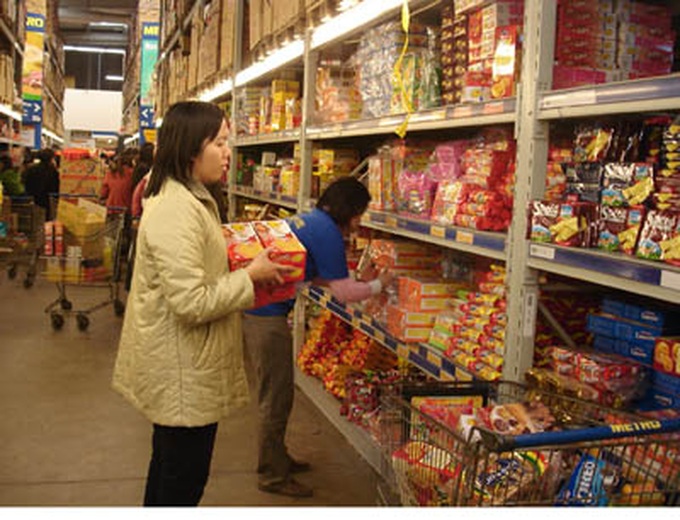
Vietnamese beverage and confectionery producers loosing market shares to foreign partners
In recent years, as the economy has developed and the population has grown, demand for beverages and confectionery has risen in Vietnam. Therefore, the market has a potential business environment that has attracted the attention of many foreign investors.
Many long-standing multi-national groups have continued to invest in the market and widened their market share, at the expense of Vietnamese companies.
In order to increase their market shares in Vietnam, several foreign investors have opted to acquire stakes in local beverage and confectionery companies. By doing this, they have benefited from several incentive policies for tax rates and simple licensing procedures.
They have only to update the technology and apply their business strategies to ensure long-term development.
Carlsberg’s acquisition of a stake in Huda Beer is regarded as a first step for such a foreign giant to eventually control the entire beer market in central Vietnam.
In 1994, Hue Beer Company co-operated with Carlsberg to set up a joint venture with equal ownership.
After over two decades of co-operation, Carlsberg wholly owned Huda Beer by late 2011, after buying the other half of the joint venture’s stake from Thua Thien Hue provincial government.
Carlsberg has also conducted several other deals in order to increase its stake in Vietnamese beverage companies.
It has increased its stake in a joint venture with Viet Ha Beer Company from initial 35% in 1993 to current 60%.
In 2007, Carlsberg bought a 30% stake in Ha Long Beer Company and the two sides set up a joint venture in Ba Ria – Vung Tau Province later that year. Recently, Carlsberg has been selected as Habeco’s strategic partner and allowed to buy a larger stake in the company.
Many other foreign beverage companies have also entered the Vietnamese market using this same partnership model.
Uni-President has acquired Tribico via joint venturing and stake buying.
British Diageo spent USD90 million on buying a 45% stake in Halico, Vietnam’s biggest alcohol producer while Masan has been provided with USD200 million by a US investment fund to acquire Phu Yen Beer and Beverage Company.
Japan’s Kirin Holdings has acquired Intefoods that owns Wonderfarm, a winter melon beverage in Vietnam.
Aneuser-Busch Inbev (AB Inbev) – the world’s biggest beer producer plans to enter the Vietnamese market next year which may well mean fierce competition in the market.
Even though the Vietnamese confectionery market is a potential investment environment, local firms find it hard to compete due to their lack of diversified products, enabling foreign firms to increase their market shares.
Lotte started business in Vietnam in the form of a joint venture with Bibica JSC. Now it has over a 39% stake in the company.
Lotte has taken advantage of Bibica’s infrastructure to further develop its own service chains, including Lotteria fast food and, Lottemart, hotel and stores.
After four years of co-operation with Lotte, Bibica has reported a decrease in its profits during the past two years. Bibica leaders have accused Lotte of price transferring of export products forcing Bibica to incur a loss of 18% in selling prices and make a loss on co-operation projects.
Glico, a leading Japanese confectionery firm has widened its market share and its investment in Vietnam via a partnership with Kinh Do Confectionery JSC.
Nabti, an Indonesian confectionery producer, also plans to build a plant in Vietnam while many other foreign investors are trying to increase their product distribution in this country.
Economists said this situation is an unstoppable development trend due to increasing demand in the local market.