
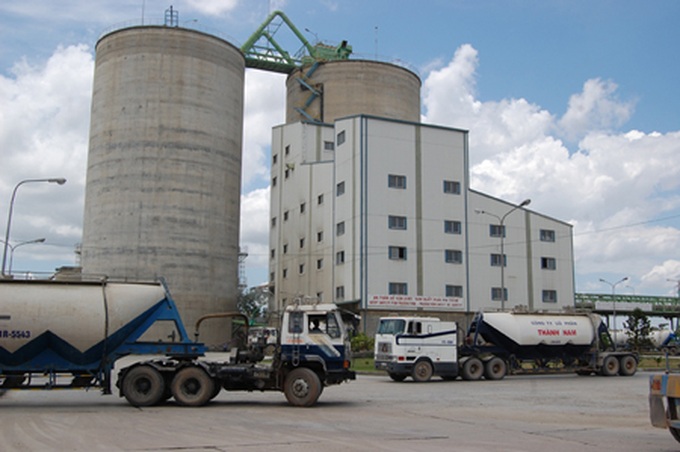
The massive investment in the domestic cement market has lead to the redundancy
Massive investment
According to the association, due to the economic difficulties, domestic demand for cement during the 2011 - 2013 period was forecast to decrease by around 14-15 million. Meanwhile, new projects had continued being implemented.
The association said by 2015, total cement output of the country would reach 94.24 million tonnes, resulting in a 25 million tonne excess, this would rise to 129.5 million tonnes by 2020.
The association suggested reviewing the list of cement projects to more realistically match market demand and focus on raising the efficiency of plant management. It has also recommended the cancellation of nine planned cement projects and a reconsideration over nine others scheduled to receive investment between 2016 and 2030 as their technology would be largely redundant by 2030.
A number of cement projects which have been licensed have been delayed due to weak investor financial capacity, such as projects in the central provinces of Binh Phuoc, Nghe An, Thua Thien-Hue and Quang Binh.
Risk of losing the local market
In reality, several loss-making cement companies have had to sell their projects to foreign partners. In November 2012, Indonesia’s Semen Gresik bought 70% of Thang Long Cement Joint Stock Company’s stake, equal to around USD230 million, becoming the company’s strategic partner.
The Indonesian cement firm will also co-operate with Thang Long Cement Joint Stock Company to expand the second production line of Thang Long JSC and build An Phu Cement Plant in Binh Phuoc Province.
According to the association, it was essential to restructure cement companies and establish cement production complexes which are strong and competitive enough to control the domestic cement market.
“At present, Vietnam is home to 46 cement companies, but only, Vicem can produce over 20 million tonnes annually,” said Chairman of the association Tran Van Huynh said.