
State-owned enterprises (SOEs) need to be restructured for better operation after being privatised, said Dr. Nguyen Kim Toan, Former Head of the Government Office’s Enterprise Renovation Department at a recent conference in Hanoi.
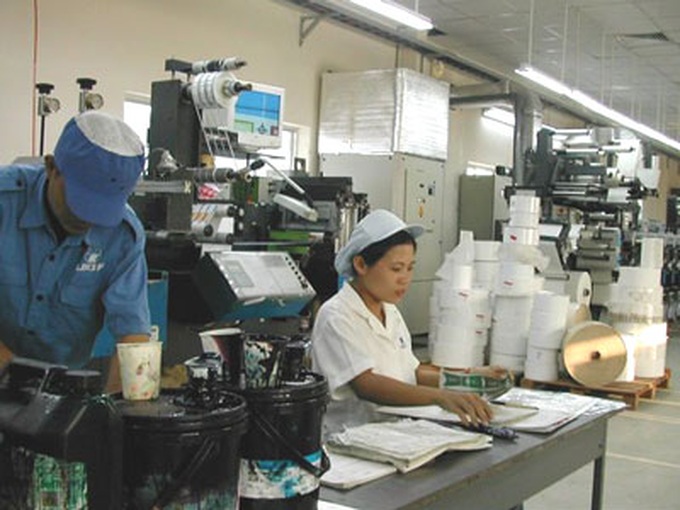
SOEs need to be restructured before privatisation
According to Dr. Toan, in recent years, privatisation has moved at a slower pace because State-owned enterprises (SOEs) find it more difficult to sell their stake in the context of current economic downturn and a high inflation rate, along with a gloomy stock market. Meanwhile, the scale of companies which need privatisation is also larger and require more time for dealing with their financial situation. After their privatisation, the State will still hold controlling stake in many firms.
She added that Vietnam may fail to fulfill its targets to privatise 500-600 SOEs by 2015, as last year only more than 10 SOEs were privatised.
“If we privatise SOEs on a massive scale we may fail to attract investors, particularly in the context of the global economic difficulties. Therefore, to enhance efficiency, we should select the SOEs best suited for restructuring,” Toan suggested.
The expert also proposed some measures for SOE restructuring, such as corporate bond issuance for strategic investors, which could lure their capital and management experience; hiring consultancy groups for restructuring, as well as managing directors; raising the number of strategic investors to five instead of the current three; and removing regulations on preferential stake for trade unions.
“Currently, many companies are having difficulties in recruiting labourers, especially in the field of high-tech. So selling preferential stake for people who pledge to work for businesses for the long-term is necessary. However, would not be effective to only focus on privatisation while ignoring the laws regulations,” she noted.
Slashing the number of SOEs for better management
“In foreign countries like the UK, the US and France, SOEs only account for 5-7% GDP, while the rate in Vietnam is 27-30%. To manage SOEs more efficiently is necessary to reduce the number of SOEs so that they make up just 4-5% of GDP,” said Associate Professor, Dr. Le Xuan Ba, Head of the Central Institute for Economic Management (CIEM).
Dr. Pham Thi Thu Hang, General Secretary of the Vietnam Chamber of Commerce and Industry (VCCI) said, currently, SOEs account for 0.95% of the country’s total number of enterprises and hold nearly VND700 trillion (USD33.3 billion) in capital. These figures remain quite high despite being sharply cut from the rate of 13.6% and VND136 trillion (USD6.4 billion) as of late of 2001.
Meanwhile, many State-owned economic groups pour their capital into non-core business such as banking, finance, insurance and securities and real estate, causing for ineffective business activities.
“In Vietnam, State-owned economic groups have dominated over the private sector because they operate in areas which private companies can completely participate in,” she said.
Vietnam has established many State-owned economic groups, but lacks a suitable management mechanism for this. The collapse of Vinashin and Vinalines are outstanding examples of the failure of the national State-owned economic sector, she pointed out.