
The current law on urban migration is set to be changed, tightening the requirements for residence in five big cities; Haiphong, Hanoi, Danang, HCM City and Can Tho, with the minimum period of temporary residence being raised from one to at least two years.
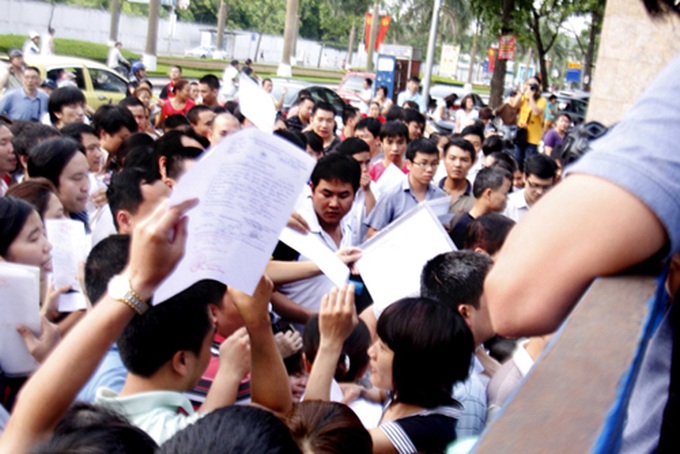 |
| Migration becomes an issue in big cities |
To qualify people must have legitimate either own homes or have established long-term residences. The draft law also stipulates that rented homes must have at least five square metres per resident.
Even tighter rules will be applied for permanent residency in Hanoi in a law set to be approved by the end of October.
In the amendment, the law would also explicitly ban authorities from arbitrarily harassing migrants, and citizens from allowing migrants register false residency at their places to earn money. Businessmen will also banned from signing indefinite contracts with workers who are not officially employed by their companies.
The stated reasons for the amendment to the current law, which was written in 2006, was that it contained too many loopholes which posed problems for population management.
The total population of the five biggest cities in Vietnam is currently 18 million, or about 20% of Vietnam's population.
From 2008 to 2011 the population of Hanoi increased by 216.954, and the average population density for the city in 2011 was 2,129 people per square kilometre. This was eight times higher than the country's average density.