
Following the Ministry of Transport’s proposal to sink VND100 trillion (USD1.8 billion) into modernizing the fleet of the Vietnam National Shipping Lines, or Vinalines, maritime experts have said it is a huge waste for the government to favor this unprofitable giant.
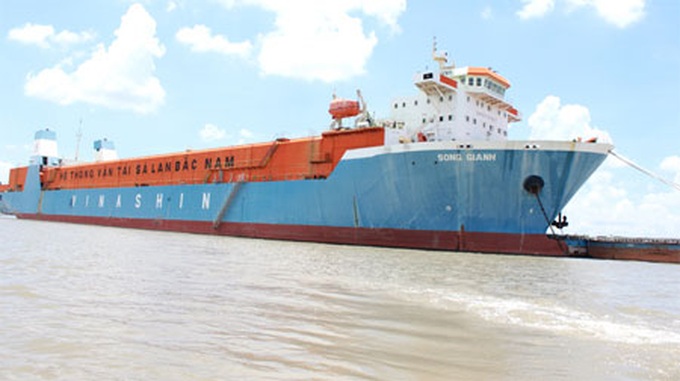
The Ministry of Transport also demanded that the government support and provide incentives in taxes, personnel, and mechanism for the state-run shipping line to industrialize and modernize its infrastructure.
That makes too many incentives for Vinalines, experts said.
“Sinking such a whopping sum into a state enterprise during these hard times for the shipping sector poses very high risks,” said a former official of the Vietnam Maritime Administration.
He said many state-run shipping lines have been exploiting their vessel fleets inefficiently.
“Vinalines’ subsidiaries all share a disease – buying old, downgraded vessels, which results in losses,” he said.
“Many firms bought ships not for their own use but for putting them on lease, only to see the vessels downgraded when the contracts ended.”
There are cases when the leased vessels were seized in overseas ports, while the lessees refused to take responsibility, and Vinalines had to pay to get the ships back.
“In 2011, Vinalines had to spend $800,000 to release a detained ship an Idian partner had leased,” he said.
A maritime expert said Vinalines should make full use of its current fleet before getting the huge incentive from the government.
“The government shouldn’t release thousands of billions of dong for Vinalines to buy new ships while their vessels are doing nothing in foreign ports or are being leased,” he pressed.
Privately-owned lines should be supported
Maritime experts said the government should support privately-owned shipping lines instead of sinking too much money in Vinalines.
“The government can provide tax or loan incentives for the private companies to develop their vessel fleets,” they said.
Meanwhile, Chu Quang Thu, former head of the Vietnam Maritime Administration, said frankly that the Vietnamese fleet does not only include Vinalines.
“Vinalines’ ships are not the main force of the national fleet.
“So why do we have to focus investment merely on Vinalines?” he said.
“In order to develop the national shipping fleet, we need to create mechanism to attract participants from other sectors to the shipping industry, rather than focus on feeding one ‘big shot’,” he added.
In the case of Vinalines, Thu said, the best solution is for the government to divest from its subsidiaries.
Vinalines currently holds a 60 percent stake of the Vietnam Ocean Shipping JSC (Vosco) and the Vietnam Sea Transport and Chartering Joint Stock Company (Vitranschart).
Many ships detained
According to Vietnam Registry, within less than the first four months of this year, there have been as many as seven Vinalines vessels detained in overseas ports in China and Australia.
The figure last year was 40 vessels in China, India, and Japan, including ‘well-known’ names such as the Hoa Sen, Vinalines Star, Cai Lan 4, Vinalines Glory, and Vinalines Global.
The ships were seized for their failure to meet technical requirements due to their old ages, while some were involved in debt and financial disputes, Vietnam Registry said.