
The large number of state-owned firms investing in non-core businesses hampers competition from the private sector, according to economists.
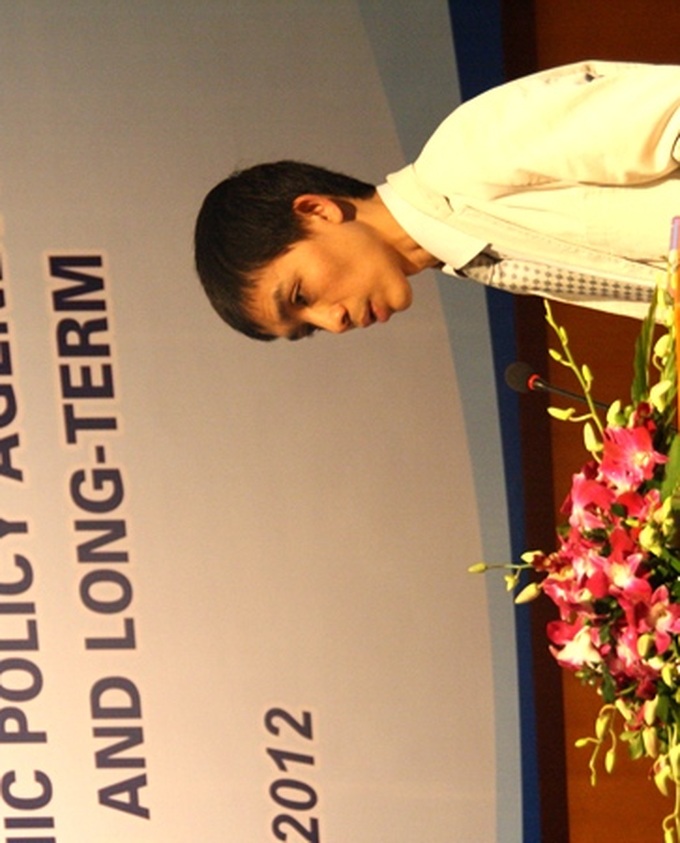 |
| Dr. Nguyen Duc Thanh |
Dr. Nguyen Duc Thanh, Director of the Vietnam Centre for Economic and Policy Research, addressed the problem on March 21, at a meeting to discuss the development of medium to long-term policy strategies for the Vietnamese macro-economy.
He cited the research of Dr. Vu Thanh Tu Anh that suggested, despite the high pressure to restructure, state-owned firms continue to contribute as much as 37.3% to the national GDP, a figure that is much higher than most countries worldwide.
At the same time, the ratio of investment in non-core business activities is also high, at 6.4%. According to these economists, such investment has hindered growth and caused difficulties for private firms. Adding to the problem, the large-scale investment by state-owned enterprises is not effective, they say.
This has been proven by the incremental capital output ratio (ICOR index) of the state-owned firms, which is calculated as annual investment divided by annual increase in GDP, which comes out to be double that of private enterprises.
Thanh said that the deeper cause stems from the disparity between investment and savings. The trend of spending outstripping savings is a burden on the national economy.
He added that the restructuring of state-owned firms must be done gradually. Until the private sector is capable of taking over the role currently occupied by state-owned enterprises, such a large-scale transformation of the economy cannot succeed.
In a recent online dialogue, Bui Quang Vinh, Minister of Planning and Investment, confirmed this evaluation, saying that the private sector still lacks the resources needed to drive development.
He said that the balance between private and state-owned sectors is definitely changing. In the period between 2001 and 2005 the private sector only contributed 32.6% to the investment capital. However this number is expected to increase to 45-46% between 2011 and 2015.